Most vibrator guides open with "clitoral or g-spot?" as if the answer were obvious. It is not — and the reason it is not is that the answer lives in your body, not in a product spec sheet. This guide does something different from a standard comparison: it gives you the knowledge to understand what external and internal stimulation actually are, explains why the distinction matters more than features or price, debunks the three beliefs that lead to the most disappointing purchases, and offers a simple decision framework that turns guesswork into a clear path. It is written for UAE buyers — locally stocked products, shared-living considerations, and delivery that arrives in plain packaging.
One Organ, Two Ways In
The most important thing to understand before choosing a vibrator is that the clitoris is a single organ — and the part you can see is only a fraction of it. The visible portion at the top of the vulva is the tip of a much larger structure that extends inward, branching along both sides. This is why external and internal stimulation feel different: they are reaching different zones of the same organ through different approaches.
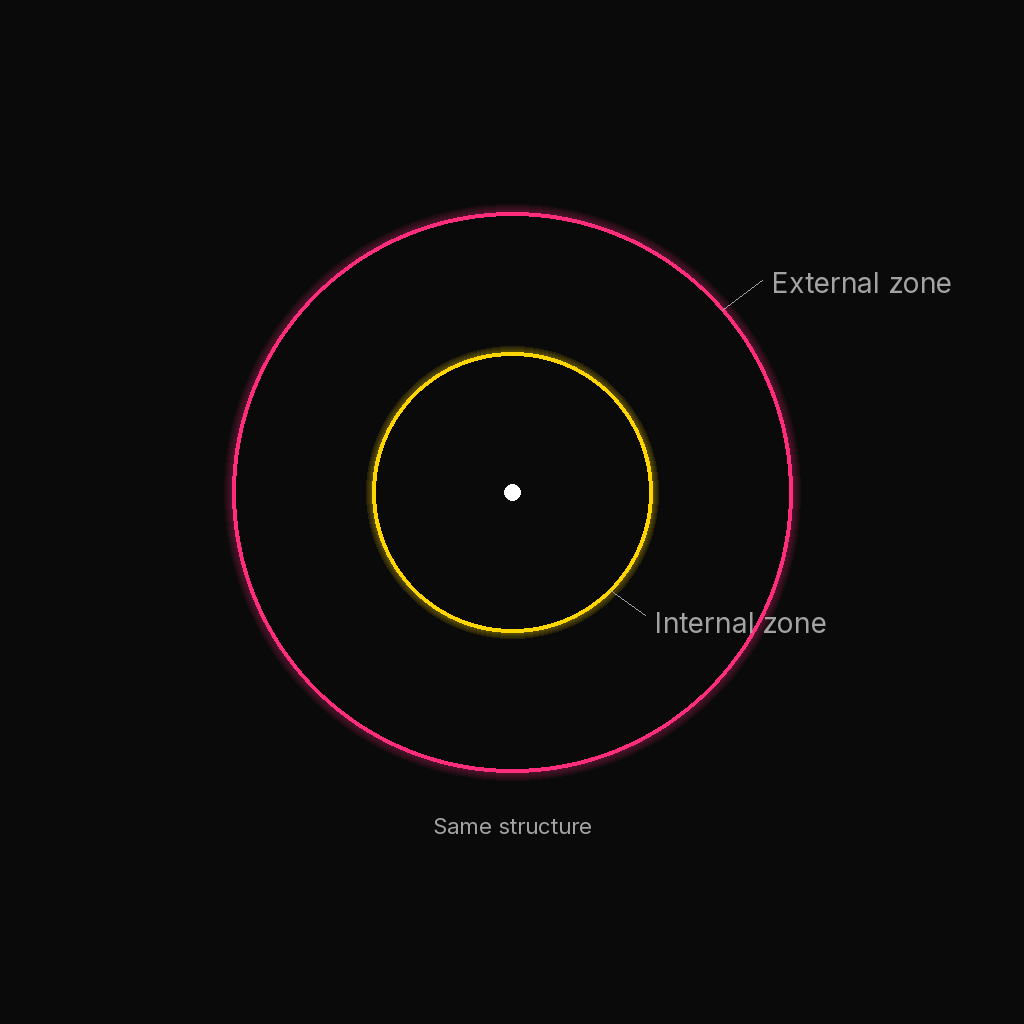
When someone says they prefer external stimulation, they mean the surface zone responds to focused vibration or pressure waves. When someone says they prefer internal stimulation, they mean the deeper zones respond to pressure through the body's own tissue. Both are valid; neither is superior. The World Health Organization's sexual health framework treats body knowledge as foundational — and knowing which zone your body responds to is the single most useful piece of knowledge in this category.
The reason most comparison guides fail you is that they treat this as a product decision. It is a body decision. The product follows the body — not the other way around.
Three Beliefs That Waste Your Money
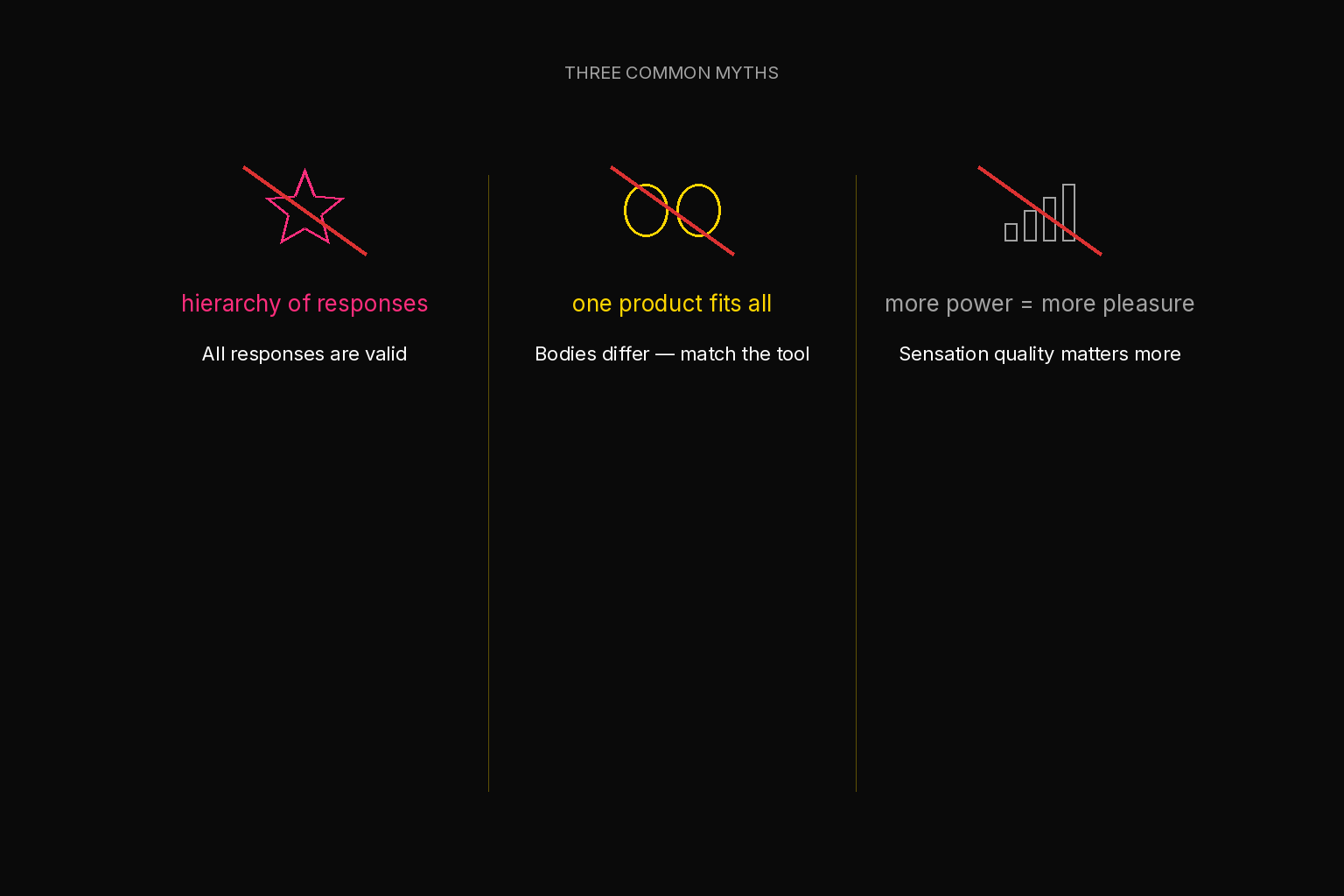
Before the comparison, three beliefs need to be addressed — because they are the source of the majority of disappointing vibrator purchases.
"Internal stimulation is more advanced." It is not. There is no hierarchy of responses. The idea that one type of stimulation is deeper, more mature, or more complete than the other is a cultural narrative, not a clinical finding. What the research does show is that the majority of women find external stimulation more reliable for producing a strong response — and that the women who report the highest satisfaction are those who understand both zones and use whichever suits them in the moment.
"A dual vibrator eliminates the choice." It eliminates the design question; it does not solve the fit question. A dual vibrator positions an internal component and an external component simultaneously — but the distance between those two contact points varies between bodies. A design built for one body type may miss both zones on another. Dual vibrators are the right third purchase, not the right first purchase — our rose vs rabbit comparison covers the fit problem in practical detail.
"Stronger motors deliver better experiences." They often deliver the opposite. The most common complaint about vibrators — especially strong internal ones — is excessive intensity, not insufficient intensity. Nerve endings adapt to strong stimulation quickly, reducing sensitivity rather than increasing it. The sweet spot for most users is the lowest intensity that produces a noticeable response — which is why air-pulse technology, which works at lower intensities than direct vibration, has quietly become the most popular category.
External Vibrators: What They Are & Who They Suit
An external vibrator is any product designed to stimulate the surface zone through vibration, suction, or air-pulse pressure waves — without any internal component. The category includes classic bullet vibrators, wand-style massagers, air-pulse stimulators, and rose-shaped suction toys. The common thread is that nothing enters the body; all stimulation is applied externally.
Who they suit best. Anyone who has found that focused, external contact is what reliably produces a positive response — which clinical surveys consistently report as the majority. They also suit first-time buyers who do not yet know their preferences, because external stimulation is the lower-risk starting point: no sizing, no insertion, no angle to learn.
The air-pulse innovation. Air-pulse or suction toys surround the target area with rhythmic pressure waves rather than direct vibration. The sensation is fundamentally different: focused, contact-free, and dramatically less likely to cause the temporary numbness that strong vibration can produce. The Air Pulse Suction Vibrator (AED 270) is the category's most approachable entry — three modes starting genuinely gentle, quiet enough for any shared flat, and built from body-safe silicone. Our air-pulse vs traditional comparison explains the technical difference.
The rose subcategory. Air-pulse technology in a discreet, giftable shape — external-only, multiple intensity levels, and small enough to live in a drawer without rearranging anything. The Rose Sucking Vibrator (AED 299) is the internet's favourite for a reason: the same suction technology as the Air Pulse above, in a form factor that passes as a decor object.
The honest limitation. External vibrators do nothing for internal sensation. If you already know you prefer the feeling of fullness or deep pressure, an external-only product will not satisfy that preference — it will feel incomplete. That is not a product flaw; it is a match question.
Internal Vibrators: What They Are & Who They Suit
An internal vibrator is any product with a curved or angled design intended to apply pressure and vibration to the deeper zones through the body's own tissue. The defining feature is shape: a pronounced curve or bulbous tip that positions the motor against the front wall, approximately 5–7 centimetres inside, where the internal nerve network is most responsive to sustained pressure.
Who they suit best. Anyone who already knows they respond to internal pressure — from a partner, from their own touch, or from the feeling of fullness during other activities. This is a smaller audience than the external camp, but for those who fall into it, the internal vibrator delivers something external products cannot.
The shape principle. A straight vibrator used internally does not reach the responsive zone effectively — the angle is wrong, and the tip presses against the back wall rather than the front. A curved design is what positions the motor against the front wall where the nerve density is highest. Shape matters more than motor power for internal toys: gentle vibration in the right place delivers more than powerful vibration in the wrong place.
The warming subcategory. Some internal vibrators add a heating function — the tip warms to body temperature or slightly above, which can increase blood flow and create a more natural sensation. The warming function is a genuine difference, not a gimmick — it changes the experience enough that users who try it rarely go back to unwarmed designs.
The honest limitation. Internal stimulation alone does not produce a strong response for the majority of women. Clinical literature consistently shows that most women require external stimulation as part of the picture — internal stimulation adds enjoyment but is rarely the complete story. The most common disappointment in this category is buying an internal vibrator expecting it to replace an external one, and finding that it delivers a different kind of pleasure rather than a stronger version of the same pleasure.
The Dual Option: When "Both" Works and When It Does Not
Dual-stimulation vibrators — often called "rabbit" vibrators — combine an internal shaft with an external arm, designed to stimulate both zones simultaneously. The category is popular because it promises to eliminate the either/or decision. The reality is more nuanced.
When dual works. A dual vibrator works when the geometry fits your body — the internal component reaches the right depth and the external arm sits on the right spot at the same time, without you needing to hold it in position. When the fit is right, the simultaneous stimulation is genuinely different from anything a single-focus product can deliver. The Dual Head Vibrator (AED 275) is designed for this role — the flexible external arm adjusts to different body geometries, which is the key variable in whether a dual product works.
When dual does not work. The most common reason dual vibrators end up unused is fit. Bodies are different — the distance between the two responsive zones varies, the angle varies, and the amount of surface tissue varies. A design built for one body type will not fit another, and there is no way to know until you try. The second reason is complexity: two motors, two controls, two points of stimulation to manage — for a first-time buyer, this is often more than the experience needs.
The honest recommendation. Start with an external product — it teaches you what surface stimulation does for you without any variables. If you later discover you want to add internal sensation, an internal vibrator is the natural second purchase. Only then, if both experiences were positive, consider a dual product — because now you know exactly what both ends need to do, and you can evaluate the fit with experience rather than hope. The progression — external first, internal second, dual third — is slower than buying a rabbit on day one, but it wastes less money and teaches you more about your own preferences.
The Decision Framework
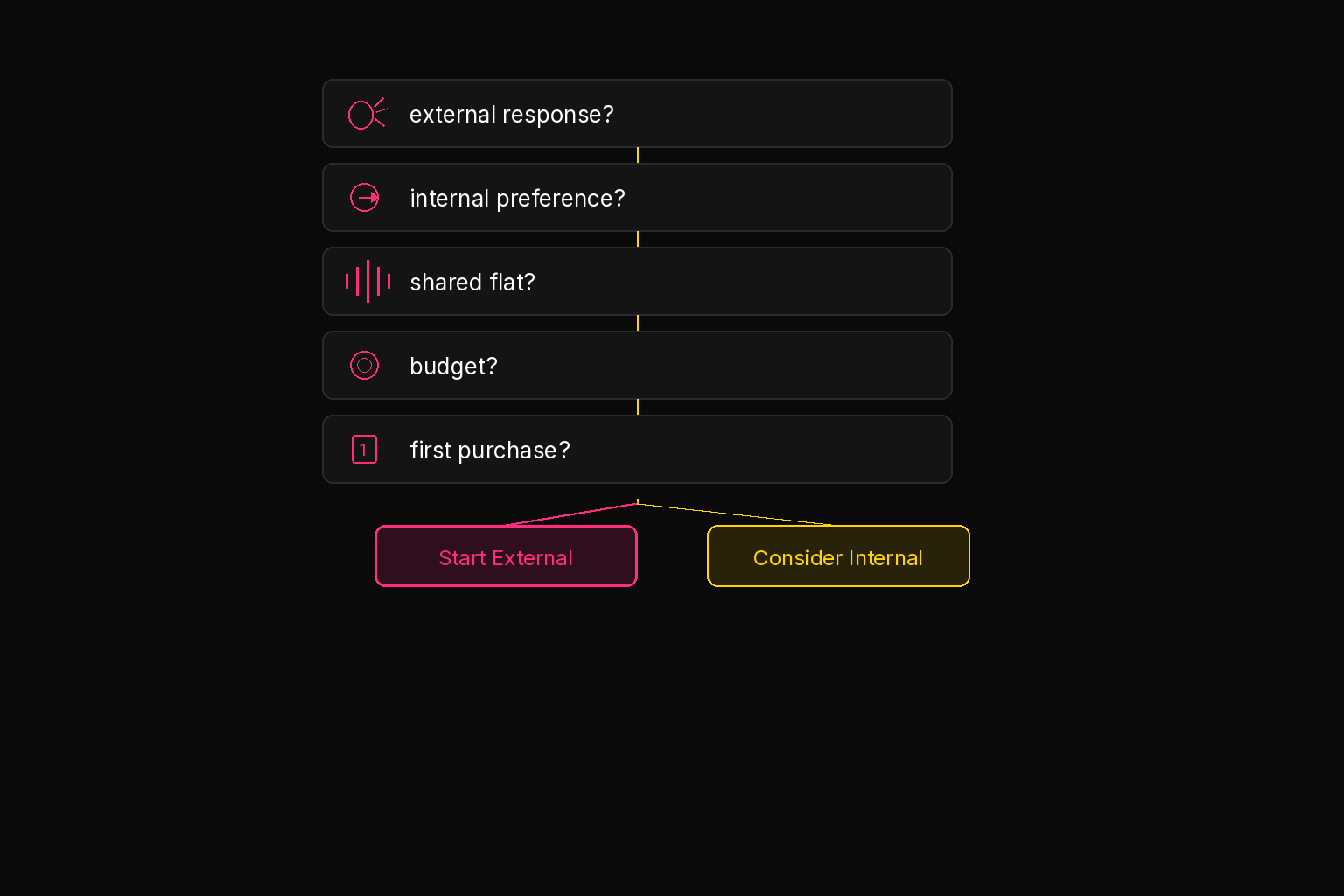
Five questions, each with a clear answer. If you do not know which type to buy, work through them in order.
1. Have you ever responded strongly to external, surface-level stimulation? If yes, start with an external vibrator. You already know your body responds to that approach — the product just makes it more reliable. If you have never tried, an external product is still the safer starting point.
2. Have you ever preferred internal pressure or fullness? If yes, an internal vibrator adds what an external one cannot. If you are not sure, you are not sure — and that means start external.
3. Do you live in a shared flat? If yes, noise matters — and external products (especially air-pulse models) are generally quieter than internal vibrators, which need more power to deliver sensation through tissue. Our beginner's guide covers noise benchmarks.
4. What is your budget? Under AED 200 gets you an excellent external product; the same budget gets you a mediocre internal vibrator, because curved designs with quality motors cost more to produce. If budget is tight, external is the better value at every price point.
5. Is this your first purchase in this category? If yes, the answer is external — full stop. Learn what surface stimulation does for you before adding variables. The first-time buyer checklist runs through the complete decision.
The Noise Factor (UAE-Specific)
In the UAE, where roughly 88% of residents are expatriates — many in shared flats with thin walls — noise is not a footnote. It is a purchase factor.
Air-pulse / suction products are the quietest category — a soft rhythmic puffing sound, easily masked by a running AC or a closed bathroom door. The Air Pulse Suction Vibrator runs under 40 dB on its lowest mode.
Traditional external vibrators vary enormously — quality models stay under 50 dB, cheaper ones exceed 60 dB. The specification matters here more than in any other category.
Internal vibrators tend to be louder because the motor needs more power to deliver sensation through tissue. Curved designs with strong motors are the noisiest category — fine for a private apartment, potentially audible in a shared flat.
Dual vibrators run two motors, and the combined volume is the loudest of all categories. Not the right choice for shared living unless both motors are individually quiet.
Our beginner's guide has a full decibel comparison and the practical "bathroom test" for auditioning noise at home.
What to Do When Nothing Seems to Work
If you have tried different products and none produced a satisfying response, three possibilities are worth considering honestly.
The product was wrong. A vibrator that is too strong, too weak, or the wrong shape for your body can fail to reach the right zone. Try a different type — if you tried a traditional vibrator, try air-pulse; if you tried a straight internal, try a curved one. The product variable is real and worth eliminating before concluding anything about your body.
The context was wrong. Stress, distraction, performance anxiety, and unfamiliarity all suppress response. If the first attempt felt clinical or pressured, try again in a more relaxed setting — with more time, more lubricant, and less expectation. In the UAE, privacy concerns in shared housing can add background tension that suppresses response without you realising it — our women's self-care guide covers building a private routine that reduces this pressure.
A clinician can help. If repeated attempts with different products in different settings produce no response, a conversation with a healthcare provider is the next step — not because something is wrong, but because a clinician can screen for factors that a shopping guide cannot address. The UAE's private healthcare system handles these questions routinely.
Frequently Asked Questions
Which is better for a first vibrator, external or internal?
External. It teaches you what surface stimulation does for you without insertion, sizing, or angle concerns. An internal vibrator adds a level of complexity that is better explored once you already know your body's external responses.
Can an internal vibrator work on its own?
For a minority of women, yes. For the majority, no — clinical literature consistently shows that most women require external stimulation as part of the picture. An internal vibrator adds a different kind of enjoyment but is rarely the complete story on its own.
What is the difference between air-pulse and traditional vibration?
Direct vibration stimulates through contact and friction; air-pulse uses rhythmic pressure waves without touching the surface directly. Air-pulse is less likely to cause temporary sensitivity reduction and suits users who find vibration too intense. Our air-pulse vs traditional comparison covers the full technical difference.
Is a rabbit vibrator the same as a dual vibrator?
Yes — "rabbit" is the colloquial name for any dual-stimulation vibrator with an internal shaft and an external arm. The name comes from the original design's ear-shaped external component. Modern designs use various shapes, but the dual-function principle is the same.
Can I use both types together?
Yes — an external toy and an internal toy used in the same session give you more control over position and intensity than a fixed dual design. Most experienced users prefer the two-product approach over a single dual model.
Which type is quietest?
Air-pulse / suction products are the quietest — the soft puffing sound masks easily. Traditional external vibrators vary; internal vibrators are generally louder because they need stronger motors. Noise matters especially in shared flats — our beginner's guide has the decibel comparison.
The Bottom Line
Stop reading comparison guides and start with what you already know about your body. If surface-level stimulation has ever produced a strong response, an external vibrator — especially an air-pulse model — is the obvious first purchase. If you later discover you want to add deeper sensation, an internal vibrator is the natural second step. And if both produce positive results, a dual product combines them — but only once you know exactly what both ends need to do. The progression is the product: one purchase at a time, one discovery at a time, each informed by the last. The Air Pulse Suction Vibrator (AED 270) and a water-based lubricant (AED 29) are the tools for the first step. Browse the wellnessae collections when you are ready to match a product to what you know about yourself.
Sources
- www.who.int — World Health Organization — sexual health and body knowledge framework.
- www.plannedparenthood.org — Planned Parenthood — sex toy safety and material guidance.
- www.globalmediainsight.com — UAE population statistics — expatriate demographics.