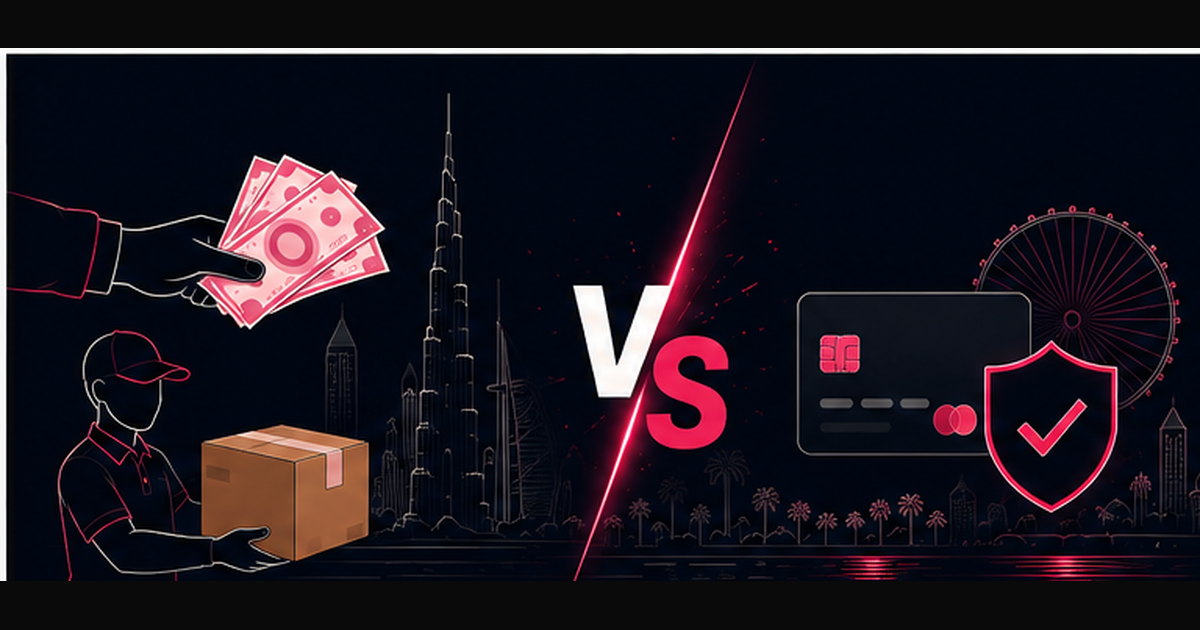
TL;DR: For buying sex toys in the UAE, cash on delivery is the safer choice for most shoppers — it leaves no entry on any bank or card statement, and nothing is paid until the plain, unmarked parcel is in your hands. Cards are safer only against fraud, thanks to 3-D Secure and chargeback rights. Unless you specifically need dispute protection, COD is the payment we recommend — and every order at Private UAE can be paid in cash at the door, anywhere in the UAE, with no card needed at all.
When the question is "which payment is safer," the honest answer depends on which risk you are actually worried about. One shopper fears a line item on a statement someone else reads. Another fears paying for an order that never arrives. This article separates the two, compares how COD and card payments really behave in the UAE, and gives you a three-question framework for choosing — ending with the recommendation most UAE shoppers act on: when in doubt, pay cash.
1. What Does "Safer" Actually Mean?
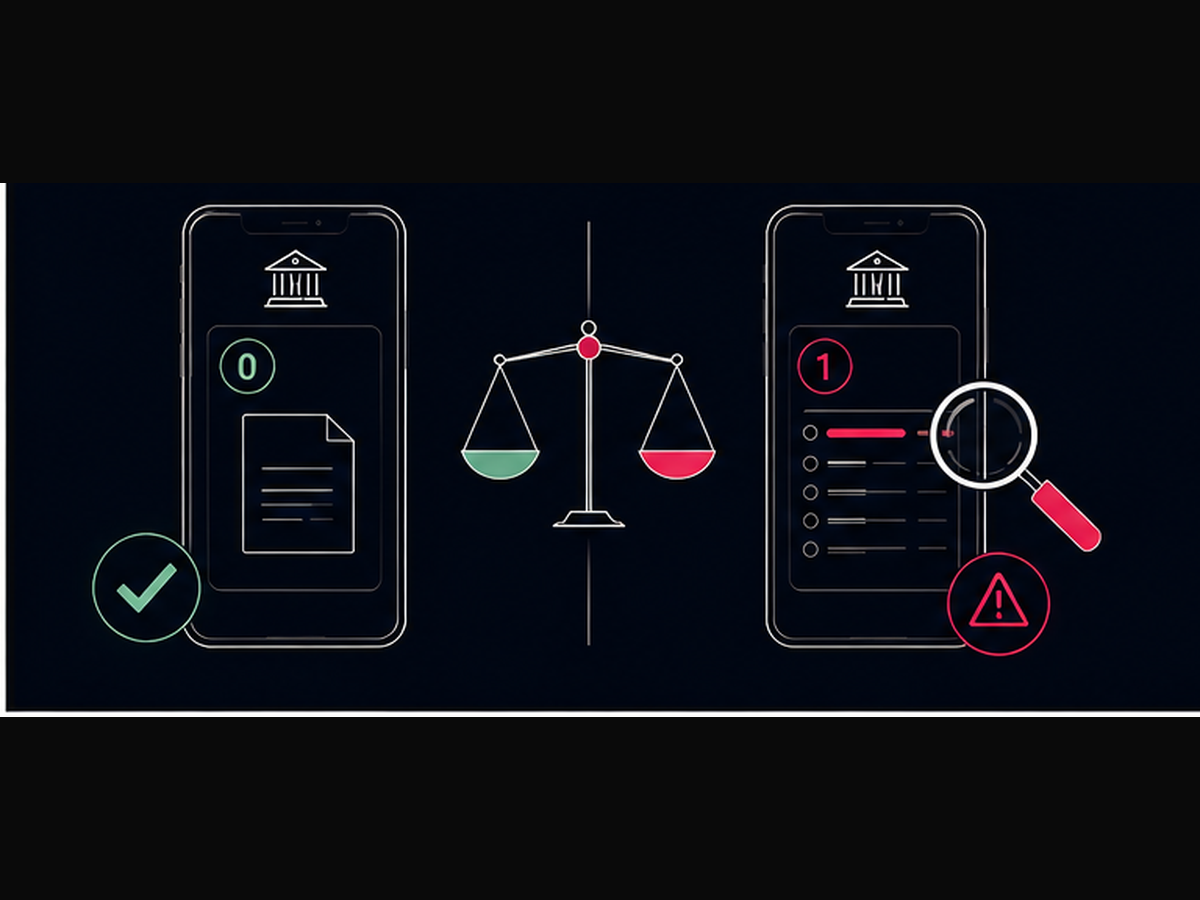
Payment safety for online purchases has two distinct dimensions: financial security — protection against fraud, errors and unresolved disputes — and purchase privacy — the absence of any record that links you to what you bought.
Almost every argument about COD versus cards collapses these two into one word and goes nowhere. So before comparing methods, decide which risk is real for you:
- Financial security risks: card details stolen, a store charging you and not delivering, a disputed charge you cannot reverse.
- Purchase privacy risks: a statement line a spouse or parent reads, a supplementary card visible to the primary holder, an emailed receipt on a shared inbox.
For groceries or phone cases, only the first column matters. For this category, both matter — and that is exactly why the answer is different here than in a generic payment guide.
2. Why Payment Choice Matters More for This Category
In a country where most residents share living spaces — family homes, flatshares, staffed apartments — the financial record of a purchase often outlives the parcel itself. Roughly 88% of the UAE's 11.5 million residents are expatriates, a population that disproportionately shares flats, cards and banking logins. A box is opened, used and stored away in a week; a card statement line sits in your banking app for years, and printed statements can circulate longer still.
Three UAE-specific realities sharpen this:
- Shared finances are common. Supplementary and family cards mean the primary holder sees every line item. If that is your situation, even a perfectly neutral descriptor is still a question you may not want asked.
- Data retention is regulated — but real. Under the UAE Personal Data Protection Law (Federal Decree-Law No. 45 of 2021), stores must handle your data lawfully and securely — but they still keep an order history tied to your name, address and phone number for as long as fulfilment requires. Payment method does not change that internal record.
- COD is a mainstream UAE habit. Cash on delivery remains one of the most-used payment methods in the Emirates — payment processors' annual MENA research, such as Checkout.com's, documents its share of online orders falling as digital payments mature, while confirming it is still the default checkout choice for a large share of shoppers. Choosing COD here is not an eccentric privacy move — it is what a large share of your neighbours already do for ordinary orders.
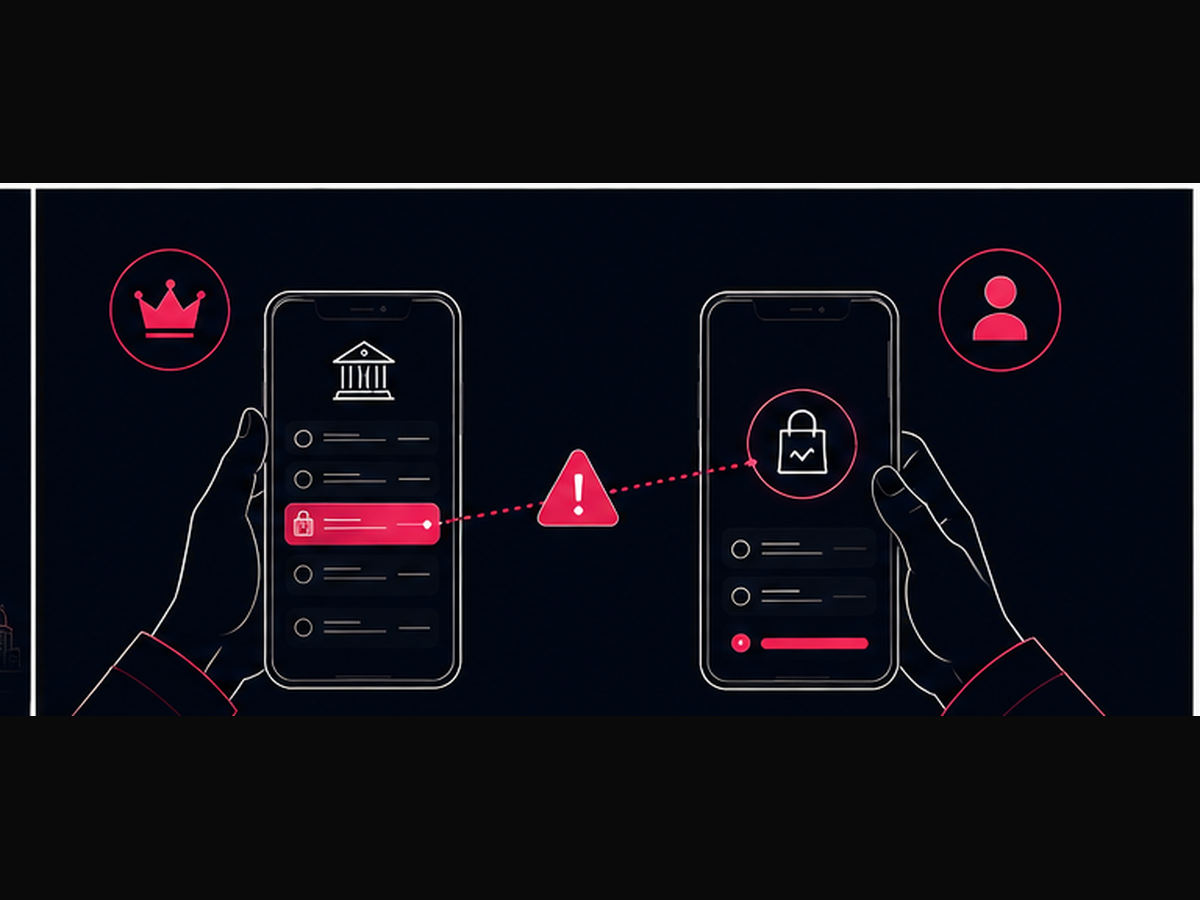
A quick self-check before ordering: open your banking app and look at the last page of your card statement. If anyone else in your household can open the same screen — or receives the printed version — that settles the payment question on its own.
The card itself is not the problem; visibility is. A supplementary or family card is a shared window into every purchase you make with it.
The takeaway: for this category, the payment method is not a checkout formality. It is the last privacy decision you make after choosing the store, the packaging and the delivery address.
3. How Each Payment Method Actually Works
Cash on Delivery (COD)
COD works exactly as it sounds: you order, the store ships in plain packaging, and you pay the courier in cash when the box reaches your door. No money moves until the parcel is in your hands.
- What record exists: the store's internal order history. Nothing appears on any bank or card statement.
- Protection if something is wrong: you inspect the parcel at handover — if the order is visibly wrong, you refuse it and pay nothing.
- Refunds: handled directly by the store to your chosen method, because no bank is involved to reverse anything.
- What it asks of you: have the cash ready on delivery day, and be reachable — a courier who cannot collect payment returns the parcel to the store.
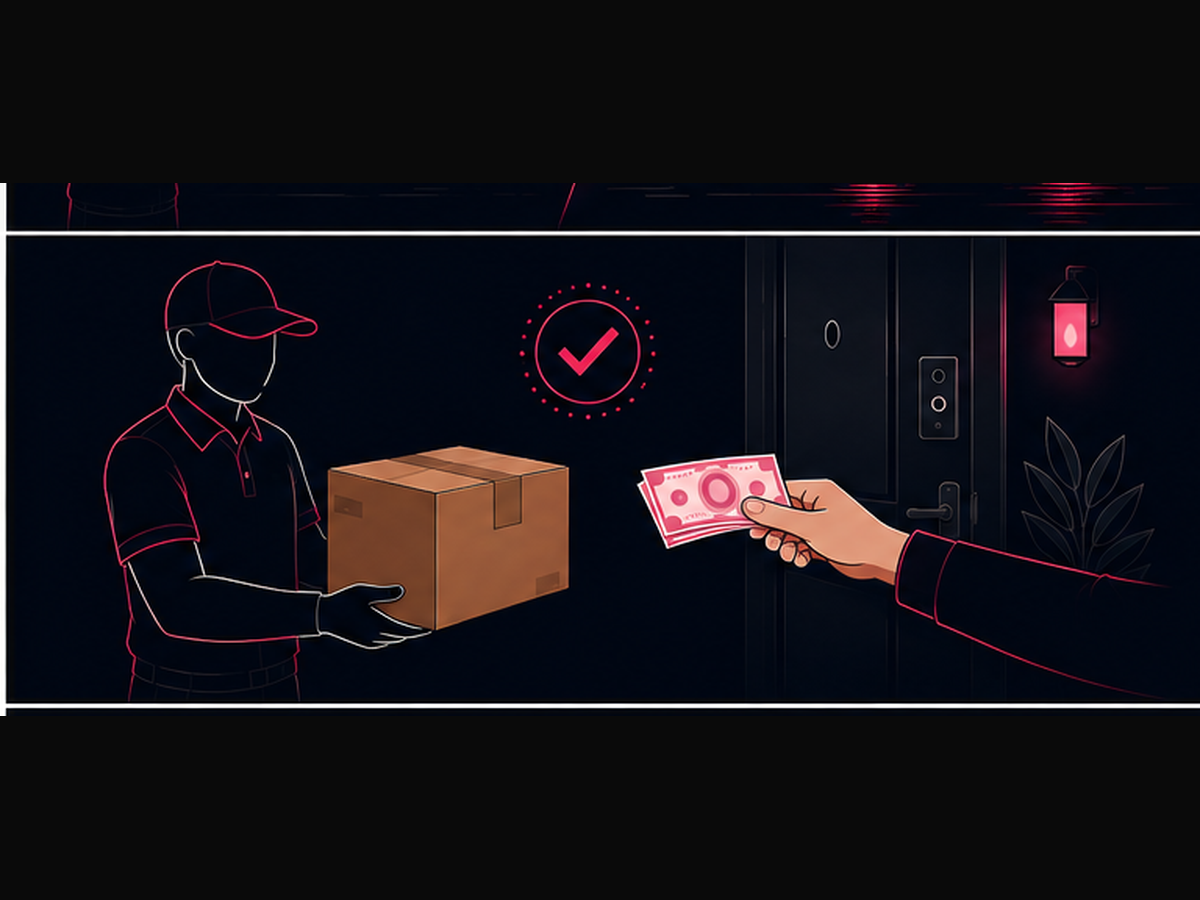
At the door, the sequence takes under a minute: the courier calls or texts, you check the plain parcel is intact and addressed to you, you hand over the cash, and the order is complete. The courier's system records a delivered parcel — nothing about what was inside or how you paid.
If nobody can receive it, the parcel simply returns to the store and nothing is charged anywhere. A missed COD delivery costs you a few days, never money.
Credit and Debit Cards
Card payments in the UAE run through 3-D Secure — the OTP your bank sends to your phone — which makes card fraud at checkout genuinely difficult. Your protection afterwards is the chargeback: if a store charges you and fails to deliver, card networks let your bank reverse the transaction, and the Central Bank of the UAE's consumer protection framework requires banks to handle such disputes fairly. This is the one safety dimension where cards clearly beat cash.
- What record exists: one line item showing the store's trading name — never a product name or category. Discreet stores bill under a neutral company name, so the line reads like any ordinary online purchase.
- Protection if something is wrong: chargeback rights plus the store's own return policy.
- The caveat: the descriptor is set by the store's payment processor. Confirm it with support before your first card order if statement visibility matters to you.
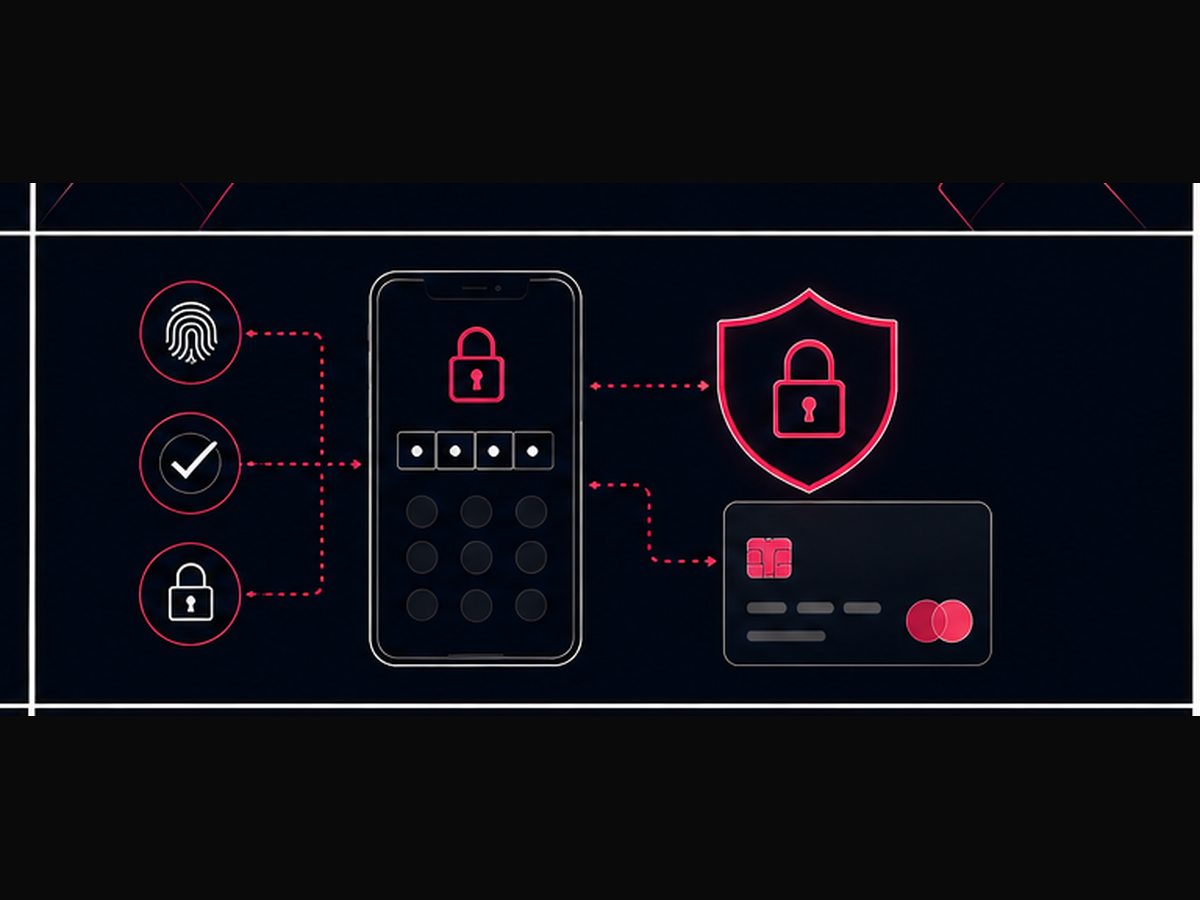
The OTP step is what makes UAE card payments hard to defraud: the charge only goes through after a code that exists only on your phone. Even a stolen card number is useless without the device in your hand.
Want certainty about the descriptor? Message support before ordering and ask what the statement line will say. Any store that takes discretion seriously answers that question in writing, immediately.
The Middle Ground: Wallets and Prepaid Cards
Digital wallets (Apple Pay and similar) insert a layer between your card and the store, and a prepaid or virtual card keeps the purchase off your main account entirely — your statement shows a wallet top-up or nothing at all. Both are reasonable answers when you want card convenience without a direct statement line.
| Cash on Delivery | Credit / Debit Card | |
|---|---|---|
| Financial record | None — cash to the courier | One line item under a neutral trading name |
| Fraud protection | Nothing to steal; nothing charged until handover | 3-D Secure OTP + chargeback rights |
| Refund route | Store policy, paid directly to you | Chargeback via your bank if the store fails |
| Failed / missed delivery | Parcel returns; you lose nothing | Charge refunded through normal channels |
| Requires | Cash ready at the door | Card, phone for OTP |
| Best for | Maximum purchase privacy | Convenience, speed and dispute protection |
Our own checkout reflects this advice: cash on delivery is the default payment at Private UAE, available across all seven emirates, with no card, no prepayment and nothing on any statement. Delivery is a flat AED 30 — free on orders over AED 1,000 — and typically arrives within 1–3 working days. You inspect the plain parcel at your door and pay cash — that is the whole transaction.
Browse the catalogue and check out with COD — no card needed at any step.
4. How to Decide: Three Questions
You do not need to weigh every row of the table. Answer these three questions and the choice makes itself:
- Who can see your statements? If you share a card, a banking login or printed statements with anyone whose questions you would rather not answer — choose COD. This single question settles most cases.
- Do you need chargeback protection? Ordering from a store for the first time, or spending an amount you could not afford to lose? A card's dispute rights are worth having. Ordering from a store you already trust with local stock? COD loses nothing that matters.
- Will you actually be home? COD needs you — or someone you trust — at the door with cash on delivery day. If your schedule makes that unreliable, cards or a wallet remove the failed-delivery loop entirely.
A practical pattern many UAE shoppers settle into: COD for the first order — when you are still verifying the store's packaging and discretion claims with your own eyes — and either method afterwards, once you know exactly how the parcel and the statement line look. A first order can be as small as a single-use lubricant pack at AED 5: one line in the checkout, cash at the door, and you have seen the whole process for yourself. And when in doubt, simply default to COD: it is the option with nothing to lose and nothing to explain. For the broader context on stores, packaging and delivery, see our discreet shopper's guide for the UAE.
5. Common Mistakes to Avoid
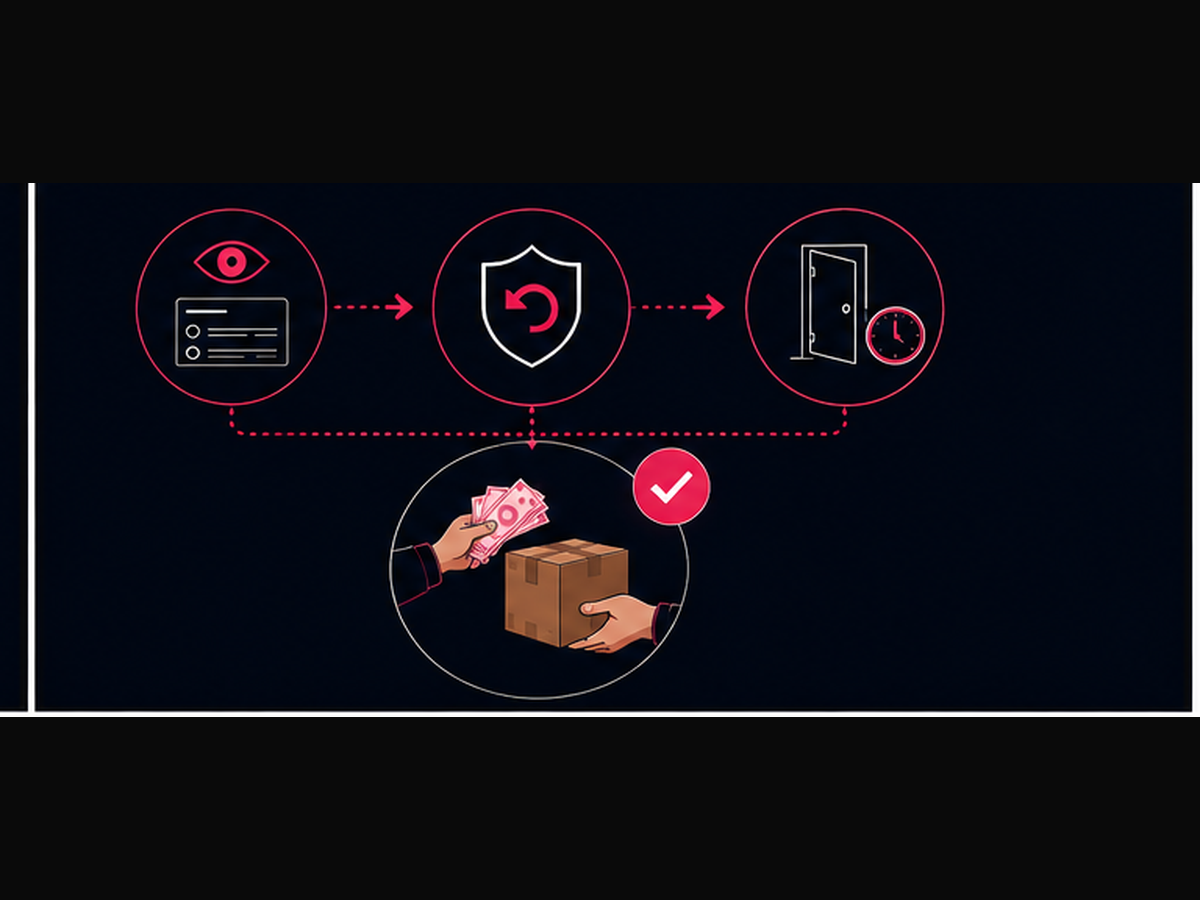
Missed a step? The three questions above are the whole decision: who sees your statements, whether you need chargeback protection, and whether you will be home to pay cash. Anything else is detail.
- Judging only by fraud risk. Generic payment advice ranks cards first because it only measures financial security. For sensitive purchases, statement visibility is a real risk too — weigh both columns.
- Using a shared or supplementary card. The primary holder sees every line item, neutral descriptor or not. If the card is not solely yours, it is the wrong card for this purchase.
- Not confirming the billing descriptor. A store can promise discretion everywhere on the site and still bill under an unexpected name. One message to support before your first card order removes the guesswork.
- Assuming COD means anonymous. The store still keeps your name, address and order history. COD removes the bank record, not the merchant one — which is why choosing a store with a serious privacy policy matters as much as the payment method.
- Paying COD unprepared. Couriers carry limited change. Have the amount ready — or at least close to it — and a phone you answer, or the parcel makes a return trip.
6. Frequently Asked Questions
Is cash on delivery safer than card payment in the UAE?
For most UAE shoppers, yes. COD leaves no entry on any bank or card statement, and nothing is paid until the parcel reaches your door — which is why it is the default choice for sensitive purchases. Cards' only advantage is chargeback protection against fraud.
What appears on my bank statement when I buy adult products online?
Only the store's trading name — never a product name or category. Discreet UAE stores bill under a neutral company name, so the line reads like any ordinary online purchase. If you want no financial record at all, cash on delivery shows nothing anywhere.
Can I get a refund or chargeback on a cash-on-delivery order?
Chargebacks exist only for card payments, so a COD refund is handled directly by the store under its own return policy. Check the policy before ordering — reputable UAE stores refund COD orders promptly to a method you choose.
Is it safe to save my card details on an online store in the UAE?
At reputable stores, yes — card details are handled by a certified payment gateway, not stored by the merchant. Avoid saving cards on shared devices, and skip any store without HTTPS and a clear privacy policy. Prepaid or virtual cards add extra distance.
Can I pay by card but still keep the purchase private?
Yes. Statements show only the store's neutral billing descriptor, and UAE data protection law limits how stores may use your data. For more distance, pay through a digital wallet or prepaid card so your main statement shows only a wallet top-up.
Related Guides
- How Discreet Delivery Works in the UAE — exactly what happens between checkout and your door, step by step.
- First-Time Buyer's Checklist — materials, sizing and what to know before your first order.
- Same-Day Delivery in Dubai — cut-off times and coverage when you want it faster.
Not sure what a good first COD order looks like? Keep it small and simple — most first orders look exactly like this:
Final Thoughts
So which payment is actually safer for sex toys in the UAE? For most shoppers, the answer is cash on delivery: no statement, no descriptor, no shared-card exposure — and nothing paid until the plain parcel is in your hands. Cards win only on chargeback protection, which matters most when you are still testing a store you have never ordered from. The pattern that works: COD as your default, a card only when you want dispute insurance, and a prepaid card if you ever want both.
At Private UAE, COD is the way most of our customers pay: browse the catalogue, check out without any card details, and pay the courier in cash when your unmarked parcel arrives — anywhere in the Emirates, typically within 1–3 days. Questions about payment or packaging? Our FAQ answers them in writing, and WhatsApp support replies in English.