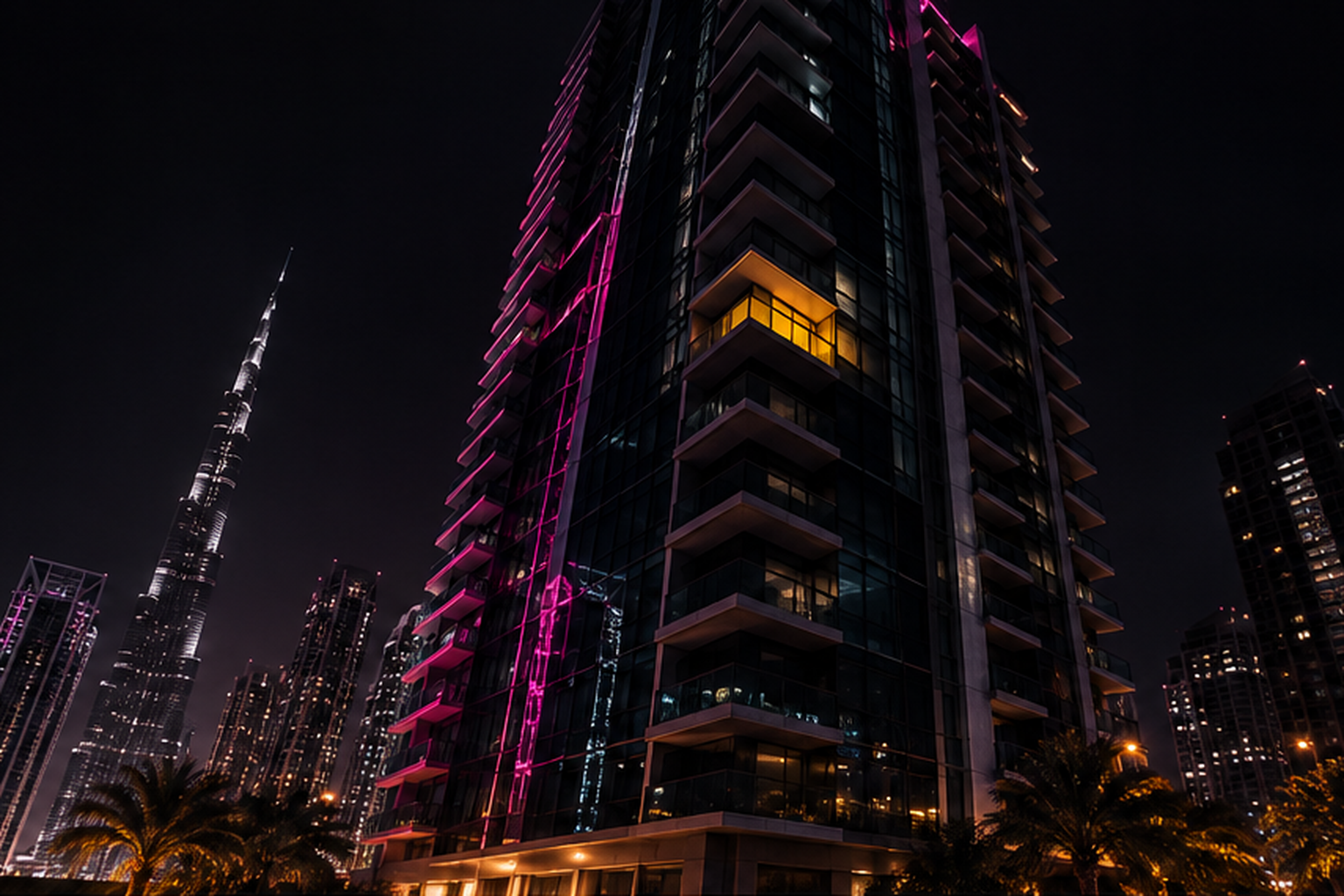
You have ordered something private. The confirmation email is in your inbox, the tracking link is live, and now the only thing between you and your parcel is the building you live in — the reception desk you walk past twice a day, the concierge who knows your name, the elevator where you share thirty seconds of silence with a neighbour, and the door you open in full view of the corridor. This is the reality for most people ordering discreetly in Dubai: the store did everything right, the packaging is genuinely unmarked, and the last fifty metres of the delivery are the part nobody planned for. This guide covers those fifty metres in detail — the specific scenarios that make high-rise apartment delivery feel more exposed than it actually is, and the exact moves that keep it private from lobby to living room.
The Dubai High-Rise Reality
Dubai is a vertical city. Roughly 88% of UAE residents are expatriates, and a large share of them live in high-rise towers — Marina, JBR, Downtown, Business Bay, JVC, Sports City, and dozens of clusters along the Sheikh Zayed Road corridor. These buildings share a common delivery anatomy: a ground-floor reception or concierge desk, shared elevators, corridors with thin doors, and a population density that means someone is almost always watching. The question is not whether the delivery will be private at the store's end — it will be, and our how discreet delivery works guide explains that layer fully — but whether it will stay private at yours.
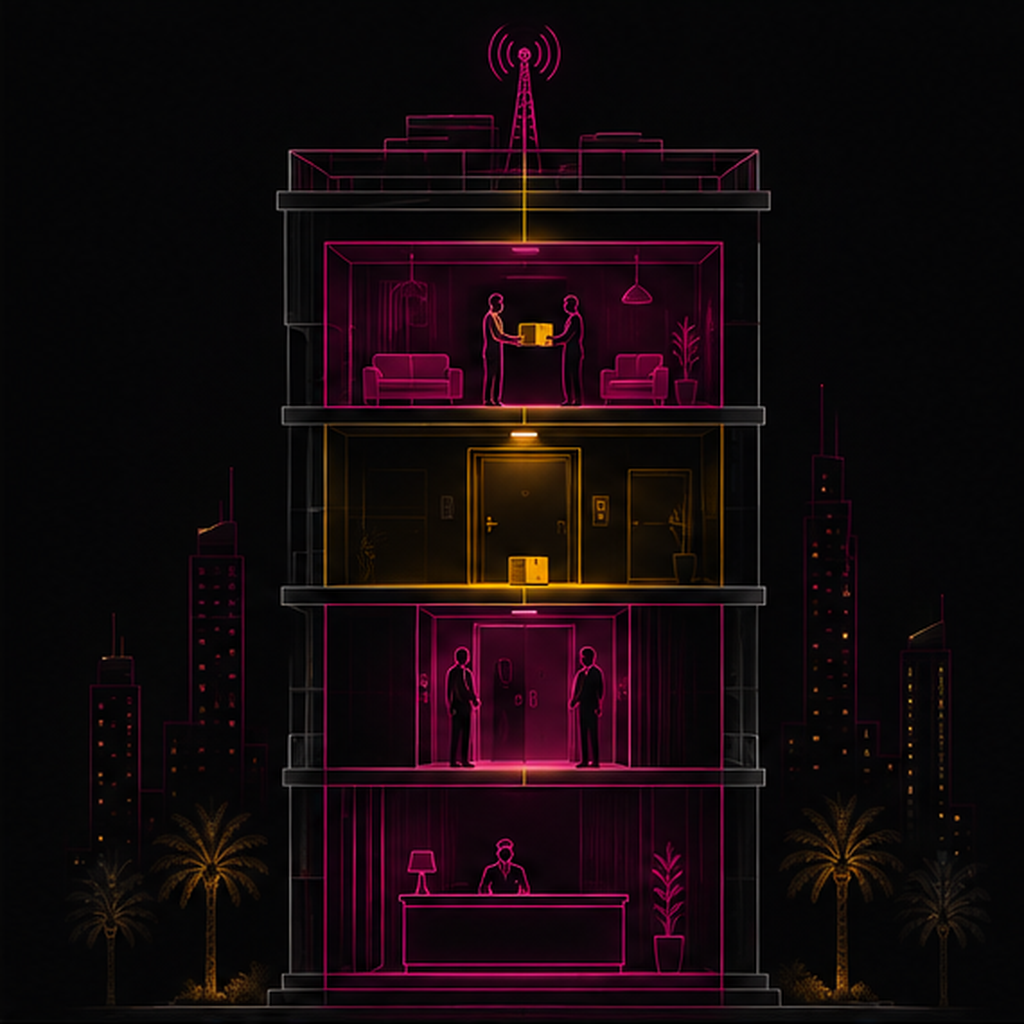
The good news is that couriers in Dubai's high-rise zones do this all day, every day. They call from the lobby, hand over a plain box, and move on in under a minute. The entire exchange is designed to be forgettable — and it is, to everyone except the person anxiously waiting for it. The rest of this guide turns that anxiety into a checklist you can follow once and never think about again.
Three structural facts make high-rise delivery in Dubai more discreet than people expect. First, the packaging is genuinely plain — no store name, no product description, no branding. Second, couriers call before they arrive, which means you control the moment of handover. Third, the volume of parcels flowing through any Dubai tower on a given day is enormous — your box is one of dozens, and the concierge has seen all of them.
What "Discreet Delivery" Looks Like at Your Door
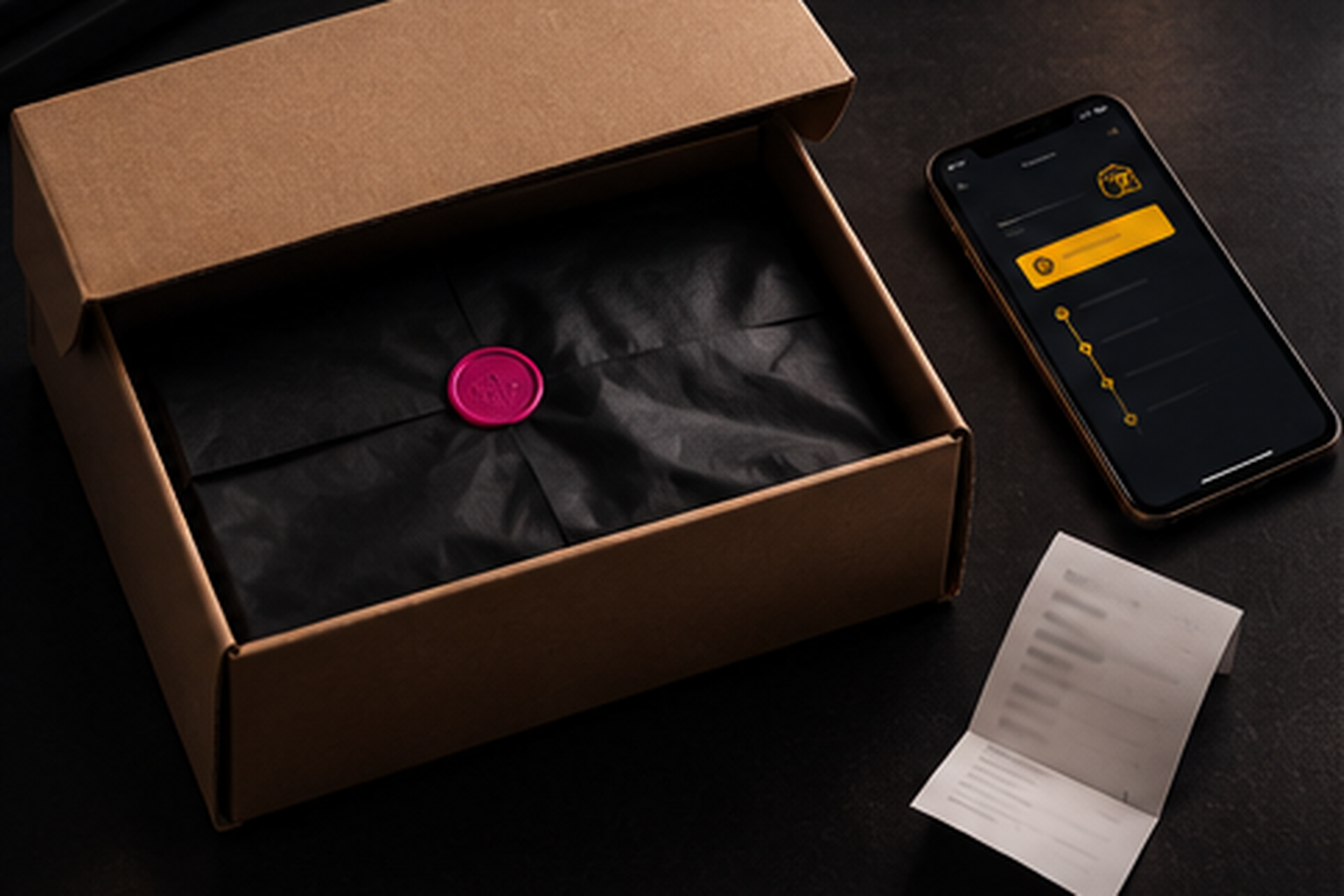
Let's describe exactly what arrives, because the fear is usually worse than the reality. The parcel is a plain brown box or a neutral courier bag — the same packaging an electronics store or a clothing brand would use. There is no store logo, no product name, and no suggestive wording anywhere on the exterior. The sender name on the label is a generic trading name — something like a holding company name or a logistics provider — not "wellnessae" or anything that hints at the category. The shipping label carries your name, your address, and a tracking number. That is all.
For cash-on-delivery orders — the privacy default in the UAE, and still popular enough that Checkout.com's MENA report tracks its continued usage — the courier collects cash and hands over the box. There is no receipt with product details, no card terminal that prints a descriptor, and no digital trail beyond the confirmation email on your device. Our COD vs card comparison covers the payment privacy angle in full.
The box is small enough to carry in one hand — most orders in this category fit in a bag-sized package. There is no oversized parcel to manoeuvre through a lobby, no awkward shape that draws glances, and no weight that makes the walk from the elevator to your door feel conspicuous. It looks like what it is: an ordinary online delivery, arriving in an ordinary way.
Dealing with Building Reception and Security
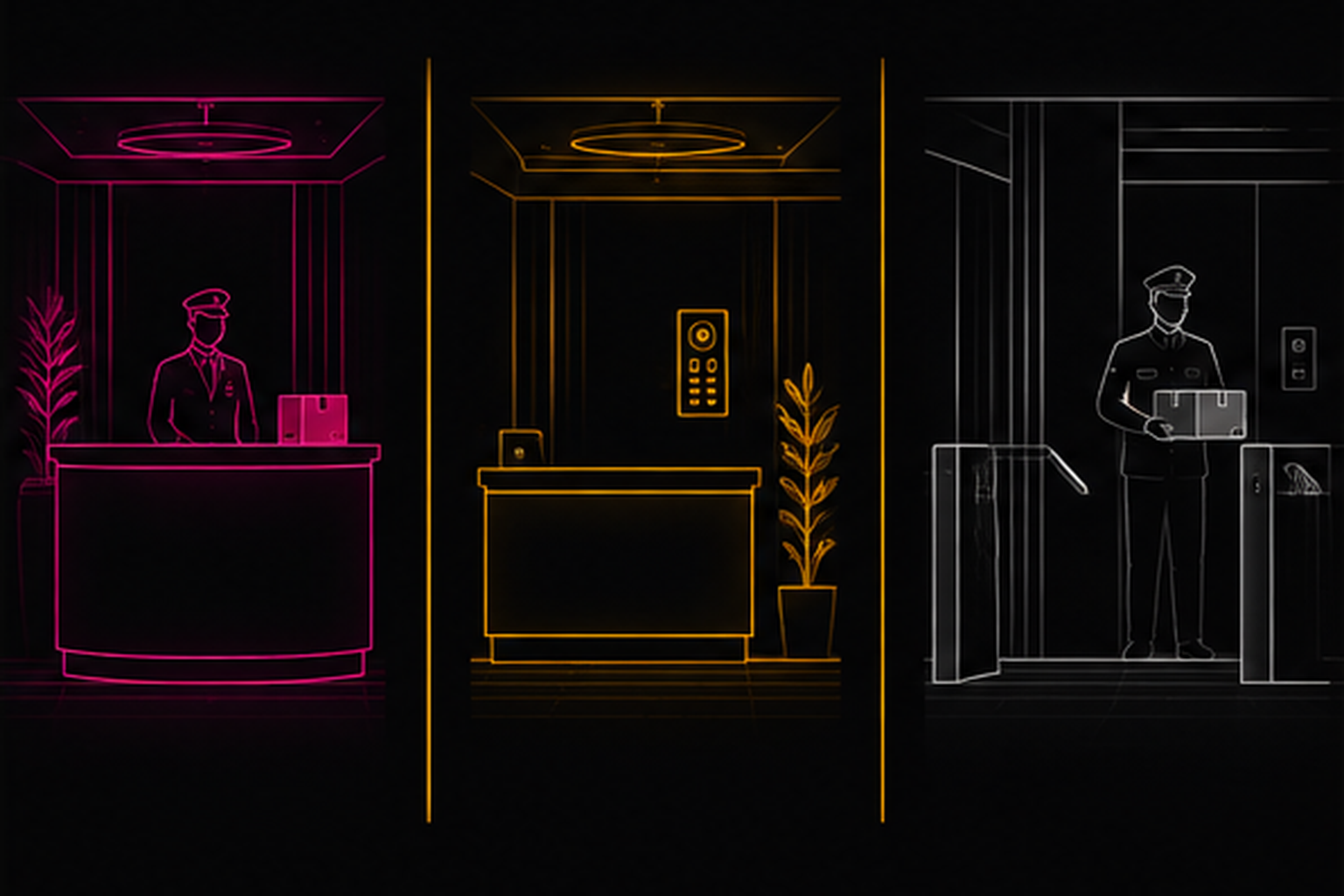
Most Dubai towers have one of three reception setups, and each one changes the delivery dynamic slightly. Here is the floor-by-floor reality for each.
Setup 1: Staffed Concierge Desk
Buildings like those in Marina Gate, Address Residences, and most Downtown towers have a staffed desk where a concierge greets couriers and residents. In this setup, the courier typically calls you from the lobby, you confirm you are home, and the courier either brings the parcel up or hands it to you at the desk. The concierge sees the parcel — but sees only the exterior, which is a plain brown box. They handle dozens of identical-looking parcels daily. The privacy risk here is not the concierge identifying the contents — they cannot — but the social moment of receiving a parcel while a neighbour is also in the lobby. The fix is simple: use the delivery-notes field to request "call on arrival, I will come down" — which turns the handover into a quick exit rather than a lobby conversation.
Setup 2: Unstaffed Lobby with Intercom
Many JVC, Sports City and Discovery Gardens towers have an intercom system but no permanent staff. The courier calls your phone, you buzz them in (or meet them at the ground floor), and they hand over the box at the elevator bank or your apartment door. This is the most private setup — there is no concierge to see the exchange, and the courier's only witness is whoever happens to be in the lobby at that moment, which in most Dubai towers is nobody during working hours. The delivery-notes instruction here is "call on arrival, I will meet you at the lobby" — direct, fast, no shared elevator ride with the courier.
Setup 3: Security Gate with No Lobby Access
Some older buildings and certain areas (Deira, Bur Dubai, parts of Al Nahda) have a security guard at the ground-floor entrance who does not allow couriers past the gate. In this setup, the courier hands the parcel to the security guard, who holds it for you. The guard sees the exterior — which is, again, a plain box — but you lose control of the timing: the parcel sits at the gate until you collect it. The fix is the delivery note: "do not leave with security, call me and I will collect from the entrance." Most couriers in Dubai's high-rise zones are accustomed to this instruction and will follow it.
The Delivery-Notes Field: Your Most Powerful Tool
Every delivery app and checkout page has a field for delivery notes — and in Dubai's high-rise context, it is the single most effective privacy tool available. Here is exactly what to write, and why each instruction works.
"Call on arrival, I will come down." This eliminates the courier coming to your floor — no shared elevator, no corridor walk, no door-opening moment. You meet them at the lobby, take the box, and walk back. Total lobby time: under thirty seconds.
"Do not leave with reception/concierge." This prevents the parcel from sitting at a desk where anyone can see it. The courier must hand it to you directly or call you for a re-attempt. In buildings with a staffed desk, this is the instruction that keeps the parcel out of public view.
"Call, do not ring the doorbell." In shared corridors, a doorbell rings loudly enough for neighbours to hear. A phone call is private. This matters more in older buildings with thin walls than in newer towers with solid-core doors, but it costs nothing to add.
"After 6 PM" or "Before 10 AM." Time-window instructions let you choose when you are home alone — which in a shared flat is often the point. Dubai's same-day couriers can follow time-window requests within their route schedule; our Dubai area delivery guide explains the timing mechanics.
"Leave at the door, do not knock." For villas and ground-floor apartments only — this turns the delivery into a zero-contact exchange. The courier places the box at your door and leaves. Not recommended for tower apartments where the corridor is shared, but ideal for private entrances.
One combination that works especially well for high-rise apartments: "Call on arrival. I will come down to the lobby. Do not leave with reception. Thank you." It is polite, specific, and removes every intermediate step between the courier and your hands.
The Parcel Locker Option
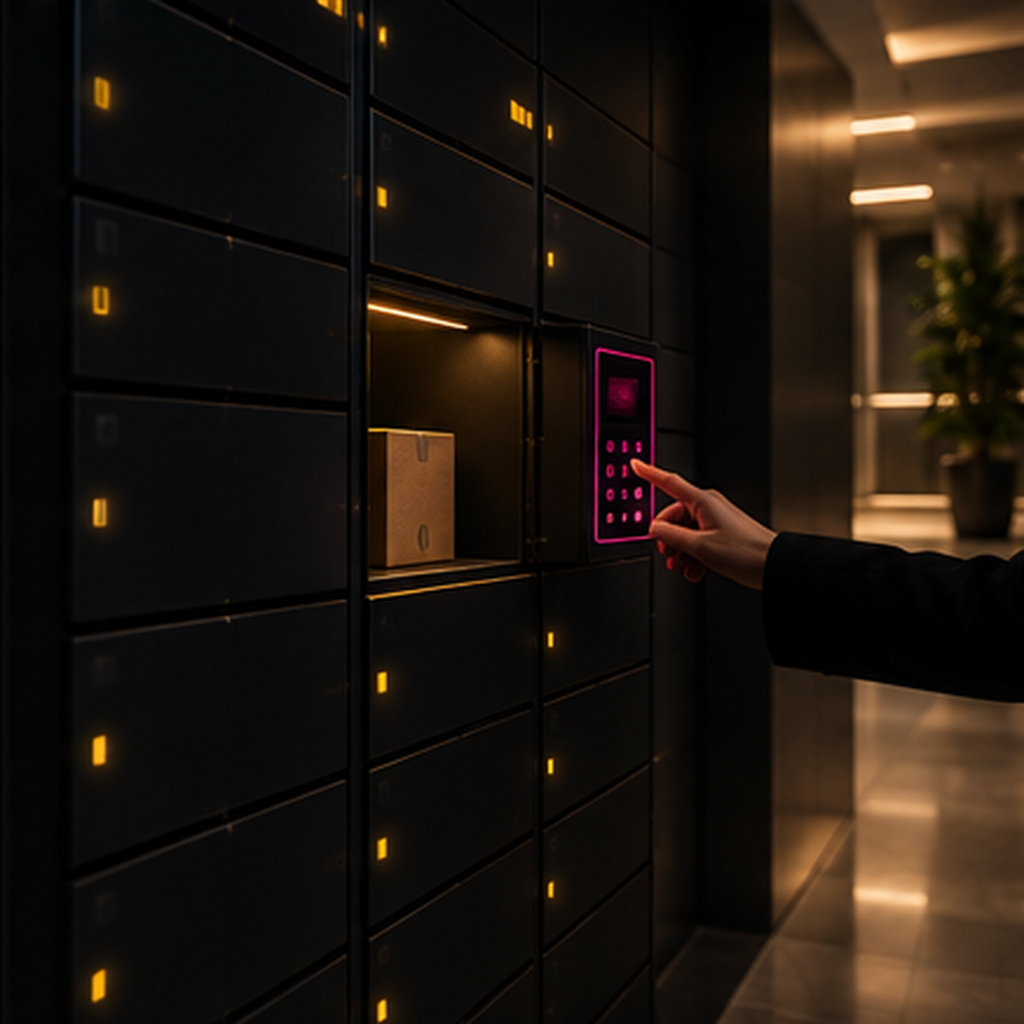
If the building reception is the anxiety, a parcel locker removes it entirely. Dubai's logistics infrastructure now includes locker networks in malls, metro stations, and select residential areas — you pick up your parcel at your convenience, from a location that has nothing to do with your building.
How it works: during checkout, select a locker pickup point instead of your home address. The parcel is delivered to a secure locker; you receive a code by SMS; you enter the code at the locker and collect the box. No concierge, no elevator, no corridor. The locker is in a public space, but the exchange is between you and a metal door — no human sees you collect it, and the locker does not display what is inside.
The trade-off is convenience: you have to travel to the locker, which may be a ten-minute drive from your tower. For most people, this is not worth the effort — the building reception risk is lower than it feels. But for anyone in a building where the concierge is a family friend, where a parent manages the desk, or where the social dynamics make any parcel a topic of conversation, a locker is the cleanest solution.
The second use case for lockers is ordering to a location near your workplace rather than your home. If your office has a mailroom you control, or if there is a locker near your office building, the delivery happens during work hours when you are already out — no coordination with a home address needed.
Timing Your Delivery
In Dubai's high-rise context, timing is not about speed — it is about choosing the moment when the lobby is emptiest, the elevator is freest, and your corridor is quietest. Here is the practical timing picture.
The quietest window: weekday mornings, 9 AM to noon. Most residents are at work. Lobbies are near-empty, elevators run without stopping at every floor, and corridors are silent. If you work from home or have a flexible schedule, this is the window to aim for. Same-day delivery in Dubai's core zones (Marina, Downtown, Business Bay) typically arrives in the evening, so for same-day orders, the morning window applies to next-day delivery.
The predictable window: weekday evenings, 6 PM to 9 PM. This is when same-day orders typically arrive. Lobbies are busier — residents coming home from work — but the volume means your parcel is one of many, and nobody is paying attention to anyone else's delivery. The trade-off is more witnesses but more anonymity in the crowd.
The risky window: Friday afternoons. Many buildings have higher foot traffic on Fridays — families visiting, residents going in and out for prayers or brunch. If privacy is a genuine concern, avoid Friday afternoon delivery windows by ordering on Thursday evening for Saturday arrival.
The shared-flat window: when your roommates are out. This is obvious but worth stating: if you share an apartment, the simplest privacy move is to schedule delivery for hours when you are home alone. Dubai's work culture makes this easy — most flatmates work predictable office hours, and the delivery-note time window lets you match the courier to that gap.
What to Order When Space Is Tight
In a shared flat or a compact studio, storage space shapes what you buy — not just how you receive it. Two product characteristics matter more in high-rise apartments than in any other housing type.
Small and silent. A compact toy that fits in a cosmetics pouch and runs under 50 decibels solves both the storage problem and the noise problem at once. The Hidden Mini Vibrator (AED 195) is designed for exactly this — it looks like a beauty gadget, lives in a drawer without rearranging anything, and its noise level disappears under a running AC. Our beginner's guide covers noise benchmarks in detail.
Consumable and replaceable. A water-based lubricant (AED 29) is the one product that does not need long-term storage — it sits on a shelf or in a bathroom cabinet alongside ordinary toiletries, and nobody looks twice at a small bottle. Adding it to any order is the cheapest way to improve the experience without adding a storage challenge.
The broader principle: in a shared living space, the best product is the one that does not need hiding. A toy that looks like a cosmetics item, a lubricant that looks like a skincare product, and a delivery that looks like any other online order — that combination is the entire privacy stack, from checkout to storage, working in your favour at every step.
After the Door Closes: Digital Privacy
The physical parcel is private. The digital trail after it may not be — and in a shared flat, the digital side is often where privacy quietly leaks. Three things to clean up after every order.
Confirmation email. Archive or delete it from your inbox if you share a device or an email account. The email typically contains the store name, which is searchable in your inbox. On a shared laptop, a quick inbox search for any reason could surface it.
Tracking SMS. The courier's tracking message arrives by SMS and may include the store's trading name. Delete it once the parcel is in your hands — it serves no purpose after delivery.
Browser history. If you browsed the store on a shared device, clear the history — or better, use a private/incognito window from the start. The store's URL, product pages and checkout flow are all in the history until you remove them. Our discreet shopper's guide covers the full digital privacy checklist.
Frequently Asked Questions
Will the building reception know what's in my package?
No. The parcel is a plain brown box or neutral courier bag with no store name, no product description and no branding. The sender label shows a generic trading name. The concierge sees an ordinary delivery — the same as every other parcel that passes through the lobby that day.
Can I have a package delivered to a parcel locker instead?
Yes. Dubai has locker networks in malls, metro stations and select residential areas. Select the locker as your delivery address during checkout, receive an SMS code when it arrives, and collect at your convenience. No building reception involved.
Does the courier ask for ID at delivery?
No. The courier confirms your name verbally and hands over the parcel. For cash-on-delivery orders, they collect payment and leave. There is no ID check, no signature requirement, and no verification beyond confirming the recipient name matches the label.
What does the sender name say on the package?
A generic trading name — typically a holding company or logistics entity, not the store's consumer-facing brand. It is designed to be unremarkable and forgettable, the same as any other e-commerce parcel in the UAE.
Can I schedule delivery for a specific time?
You can specify a time window in the delivery-notes field (e.g., "after 6 PM" or "before 10 AM"). Dubai's same-day couriers follow these instructions within their route schedule. For precise control, choose next-day delivery and specify a morning or evening window — the courier's route is more predictable on a next-day timeline.
The Bottom Line
The last fifty metres of a discreet delivery are the part you control — and the part that matters most. The store packages the parcel invisibly; the courier calls before they arrive; and you decide exactly how the handover happens by writing one sentence in the delivery-notes field. "Call on arrival, I will come down. Do not leave with reception." That single instruction eliminates every intermediate exposure between the courier's van and your front door. In a city of towers, the lobby is the only stage — and with the right note, you own it. For the full delivery mechanics across Dubai's areas, our Dubai delivery atlas has the map. For the broader privacy picture from checkout to storage, our discreet shopper's guide covers the rest.
Sources
- www.globalmediainsight.com — UAE population statistics — expatriate demographics and housing distribution.
- www.checkout.com — Checkout.com MENA report — cash-on-delivery usage trends.