Cleaning a sex toy takes thirty seconds. Skipping it costs months of product life, invites bacteria that soap alone cannot reach, and turns a body-safe material into a health risk through neglect rather than design. The irony is that the care routine is genuinely simple — warm water, mild soap, thorough drying — and the only reason most people get it wrong is that nobody ever taught them the material-specific details. This guide does. It covers every material you will encounter, the five-step routine that works for all of them, the UAE-specific challenge of drying and storing in heat and humidity, what to do when you are travelling, and how to know when a product has reached the end of its life. The whole thing takes less time to read than a single cleaning cycle takes to complete.
Why Cleaning Matters More Than You Think
A sex toy is a surface that touches mucous membrane — tissue that absorbs more readily than skin. Any bacteria, mould or chemical residue left on that surface after use has direct access to the body, and the consequences range from mild irritation to genuine infection. The risk is not theoretical: clinical literature on toy hygiene consistently identifies improper cleaning as the primary vector for preventable issues, not the material itself. A body-safe silicone toy cleaned badly is less hygienic than a mediocre toy cleaned well.
The second reason is longevity. Silicone degrades slowly; TPE degrades faster — but both degrade fastest when moisture, body fluid or lubricant residue is left sitting on the surface between uses. Drying is as important as washing, and in the UAE's humidity it is the step most people rush or skip entirely.
The third reason is smell. A toy that "always smells a bit off" is not aging — it is growing biofilm in pores or on a surface that was not dried properly. The fix is not perfume or a sealed bag; the fix is the routine below, done every time.
Cleaning by Material: What Each One Needs
The single most important fact about toy cleaning is that different materials require different approaches. What works perfectly for silicone can destroy TPE, and what sanitises glass is overkill for a motorised vibrator. Here is the material-by-material breakdown, in the order you are most likely to encounter them.
Silicone (Non-Porous)
Medical-grade or platinum-cured silicone is the gold standard — non-porous, hypoallergenic, and the only common toy material that can be fully sterilised. The cleaning hierarchy, from simplest to most thorough:
- Warm water + mild unscented soap. The everyday routine. Wash for at least thirty seconds, rinse completely, dry fully. This removes surface bacteria and lubricant residue.
- Boiling for 3–5 minutes. For non-motorised silicone toys only — no motor, no battery, no electronics submerge. Boiling kills everything soap cannot reach. Do this once a week or after sharing between partners.
- 10% bleach solution soak (2 minutes), then thorough rinse. The clinical-grade option for toys used during illness or shared without barriers. Rinse at least three times — bleach residue on mucous membrane is worse than the bacteria it replaced.
Our silicone vs TPE materials guide explains why silicone can take all three methods while TPE cannot.
TPE / TPR (Porous)
TPE is softer, cheaper and mouldable into realistic textures — which is why most sleeves and torsos use it. The trade-off is porosity: microscopic holes in the surface trap fluid and bacteria below the reach of soap. TPE cannot be boiled, cannot go in a dishwasher, and cannot be sterilised fully — only surface-cleaned. The care routine:
- Warm water + mild soap, immediately after use. Do not let residue dry on the surface — TPE absorbs more the longer fluid sits.
- Pat dry with a lint-free cloth. Towel fibres stick to TPE's textured surface and are difficult to remove.
- Dust with renewal powder or cornstarch once fully dry. TPE loses its soft feel as it dries; powder restores it and prevents the surface from becoming tacky.
TPE's porous nature means replacement is not optional — it is a maintenance schedule. A well-cared-for TPE sleeve lasts six to twelve months; a neglected one develops odour and surface changes within weeks.
ABS Plastic (Non-Porous)
The hard plastic used in many vibrator casings and bullets. Non-porous and easy to clean, but not heat-safe above about 80°C. Warm water and soap is the complete routine; do not boil. If the toy has a motor, never submerge — wipe the external surfaces with a damp soapy cloth, then a clean damp cloth, then dry.
Glass and Stainless Steel (Non-Porous)
The easiest materials to maintain. Both are non-porous, chemically inert and can be sterilised by any method — boiling, bleach solution, dishwasher (top rack, no detergent for steel), or even an autoclave if you have access to one. Warm water and soap for everyday use; boiling after sharing. Both materials are also compatible with every lubricant type, including silicone-based — unlike silicone toys. Our lubricant compatibility guide covers the full matrix.
The 5-Step Cleaning Routine
This routine works for every material and every product type. Adapt the soap and water temperature to the material table above; the sequence does not change.
- Wash immediately after use. Do not leave the toy on a nightstand or in a drawer unwashed. Residue dries, bonds to the surface and becomes harder to remove with every hour — especially on TPE.
- Use warm water and a mild, unscented soap. Fragranced soaps leave chemical residue on porous surfaces. Dish soap is too aggressive for TPE; a gentle hand soap or dedicated toy cleaner is the safe default.
- Clean every surface, including textured areas and internal channels. Sleeves need to be turned inside out. Textured toys need a soft brush — an old soft-bristle toothbrush works — to reach recessed patterns. Do not forget the charging port area on motorised toys; wipe around it, never inside it.
- Rinse until no soap residue remains. Soap residue on a toy surface causes irritation the next time it touches skin. Rinse under running water for at least fifteen seconds after the last soap contact.
- Dry completely before storing. This is the step most people skip, and in the UAE it is the step that matters most. Air-dry on a clean surface — a dedicated drying rack, a clean towel, or a lint-free cloth — with airflow around the toy. Do not seal a damp toy in a bag or drawer.

The Five Mistakes That Shorten a Toy's Life
Most damage to sex toys comes not from use but from cleaning done wrong. These five mistakes are the ones that matter — and they are all easy to fix once you know to look for them.
Mistake 1: Leaving it unwashed overnight. Residue that dries on a TPE surface bonds into the pores and becomes impossible to remove fully. On silicone it is less catastrophic but still leaves a biofilm that a quick rinse next morning does not clear. Wash within minutes, not hours.
Mistake 2: Using antibacterial wipes as a permanent solution. Wipes are a bridge, not a routine. They leave chemical residue on porous surfaces and cannot reach textured patterns or internal channels. A wipe buys you time until you reach a sink; it does not replace one.
Mistake 3: Sealing a damp toy in a bag or drawer. Moisture trapped in a warm, dark space is the recipe for mould — and in the UAE's climate, "warm and dark" describes most drawers and bags. Air-dry fully, then store. The extra fifteen minutes of drying time prevents weeks of shortened product life.
Mistake 4: Mixing materials in storage. Two TPE toys touching each other in a warm drawer can chemically bond — the surfaces fuse where they meet. Silicone toys are safe next to each other, but TPE needs separation: individual pouches, a clean cloth between them, or dedicated compartments.
Mistake 5: Skipping lubricant because "it is easier to clean without it." The opposite is true. Friction without lubricant causes micro-abrasions on both the toy surface and the body — and those abrasions harbour bacteria that cleaning alone cannot reach. A water-based lubricant makes the toy easier to clean, not harder. Our lubricant compatibility guide explains which lube works with which material.
Drying and Storage in the UAE Climate
The UAE's heat and humidity create a specific challenge that cooler climates do not: moisture trapped inside a storage pouch or drawer in a warm room accelerates mould growth on TPE and can degrade silicone's surface finish over time. The storage picture is different for each material.
Silicone toys. Once fully dry, store in a clean cotton pouch or a breathable fabric bag — not a sealed plastic bag, which traps residual moisture. Keep away from direct sunlight and heat sources; UAE window sills in summer can exceed 50°C, which is above the safe long-term storage range for most elastomers.
TPE toys. After drying and powdering, store in a dedicated case with airflow — a ventilated pouch or an open drawer. Never store two TPE toys touching each other: the materials can chemically bond over time, especially in heat. Place a clean cloth between them if space forces co-storage.
Motorised toys. Store with the charging port dry and uncovered. If the toy came with a dust cap, use it. Charge to roughly 50–80% for long-term storage, not 100% — lithium batteries degrade faster at full charge in warm environments.
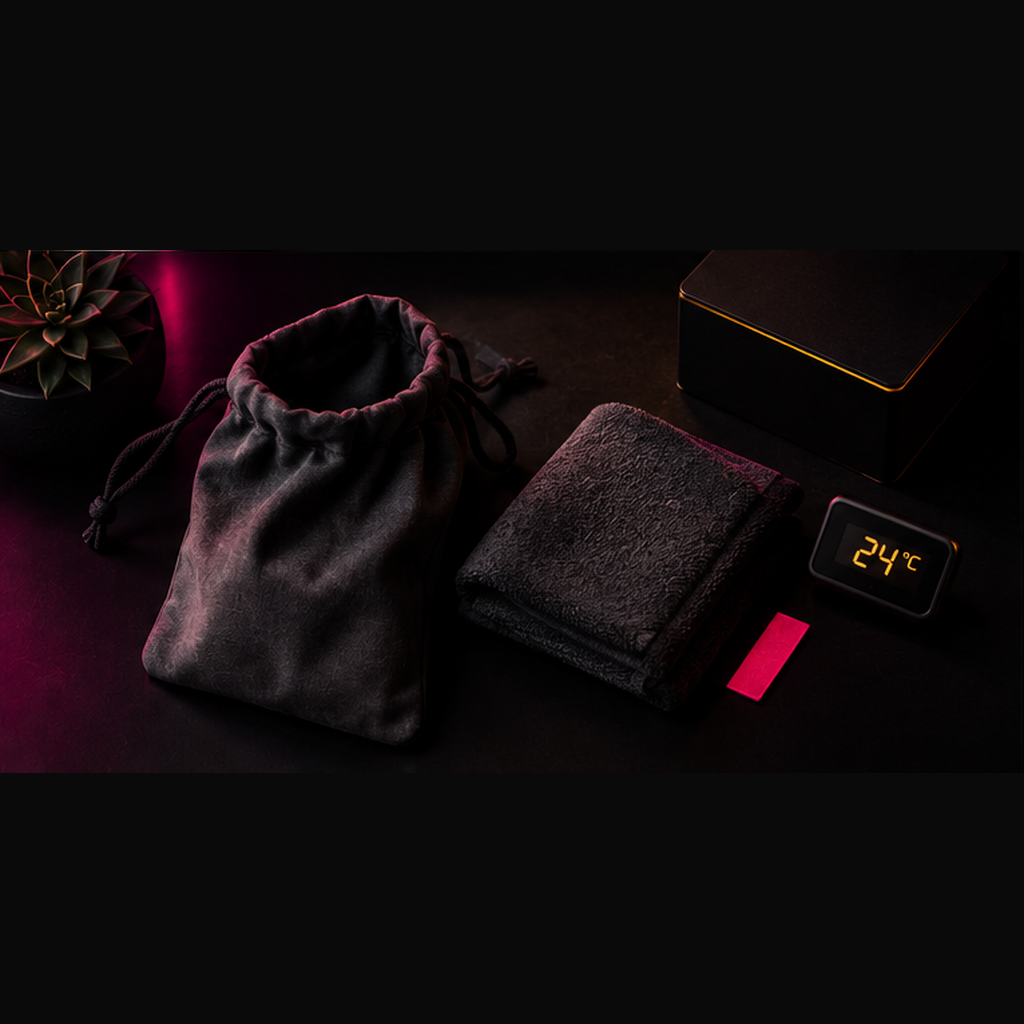
One UAE-specific note: if your apartment runs air conditioning continuously (as most do), the indoor humidity is low enough that surface moisture evaporates quickly — which is good for drying, but means TPE dries out and needs powdering more often than in humid climates. If you do not run AC, a dehumidifier in the storage area is worth the investment for product longevity alone.
A common question: can I store toys in the bathroom? No. Bathrooms are the most humid room in any home, and UAE bathrooms are no exception — even with an extractor fan. The warm, damp environment is the fastest way to grow mould on a porous surface. A bedroom drawer with airflow is always the better location.
How Often to Replace Each Material
Every material has a lifespan, and knowing it prevents both premature disposal and — more commonly — using a product well past the point where it is safe.
| Material | Expected Lifespan | Replace When |
|---|---|---|
| Medical-grade silicone | Several years with proper care | Surface becomes sticky, cracks appear, or odour persists after thorough cleaning |
| TPE / TPR | 6–12 months with diligent care | Odour returns within hours of cleaning, surface becomes tacky despite powdering, or discolouration appears |
| ABS plastic | Several years | Cracks, motor failure, or surface damage that exposes rough edges |
| Glass / steel | Indefinite | Chips, cracks, or surface scratches that feel rough to the touch |
The cost angle matters too. A AED 60 TPE sleeve replaced every nine months costs AED 240 over three years. A AED 285 silicone toy bought once and cared for properly costs less over the same period and stays hygienically superior throughout. Our materials guide runs the full price-per-year comparison.
Travel Cleaning: Hotels, Gym Bags and Shared Spaces
Travelling with a toy introduces two problems: cleaning without your home setup, and storing without questions. Here is the practical version.
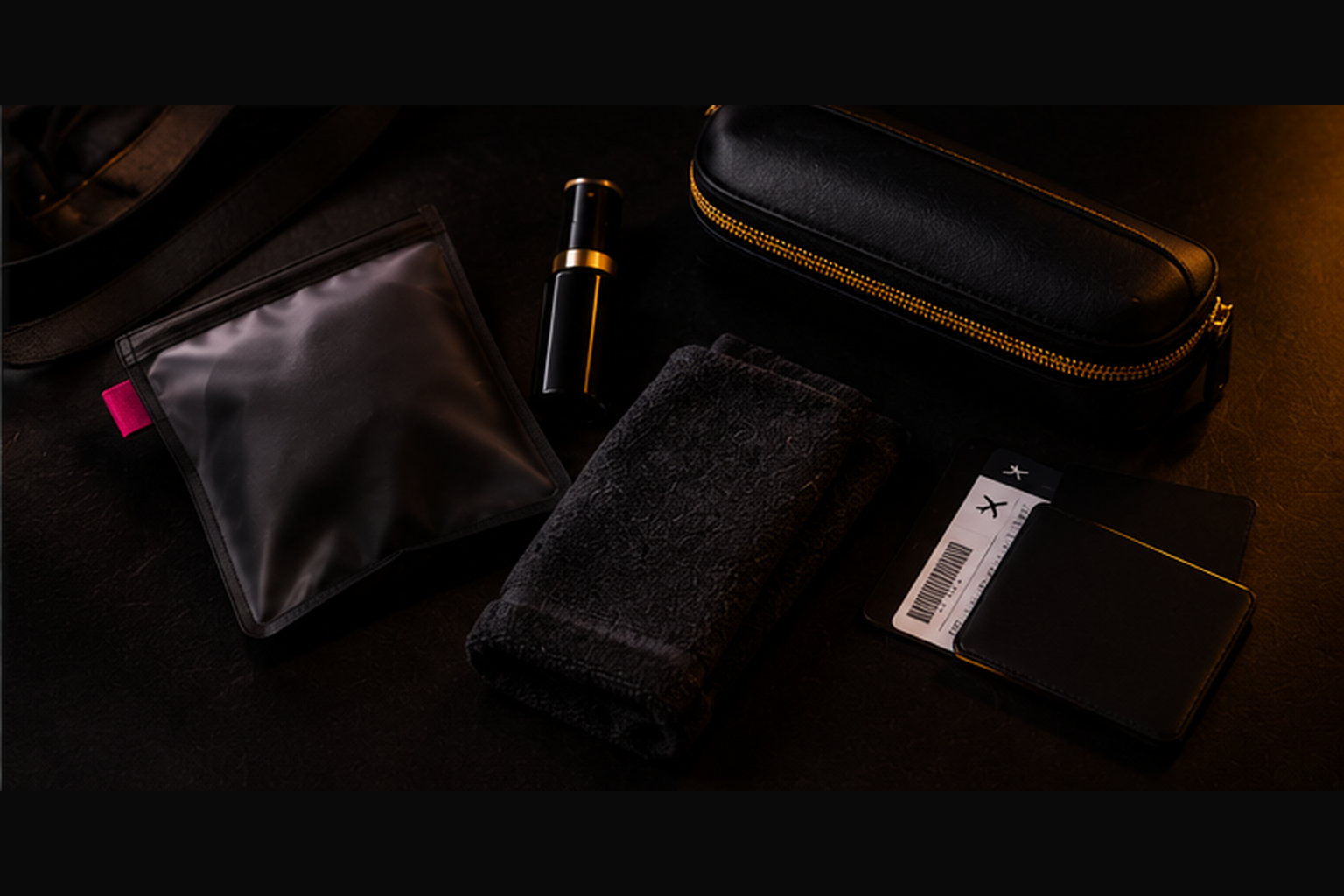
In a hotel. Wash in the bathroom sink with the hotel's hand soap (most are mild enough) and warm water. Dry on a clean towel near the AC vent — hotel rooms in the UAE run air conditioning constantly, so drying is fast. Store in the toy's own pouch inside your luggage, not loose among toiletries.
In a shared flat or gym bag. If you cannot wash immediately, wipe the toy thoroughly with an unscented baby wipe or a damp cloth, seal it in a ziplock bag temporarily, and wash properly as soon as you have privacy. Do not leave a used toy unwashed in a gym bag for hours — the warm, dark, enclosed environment is ideal for bacterial growth.
Dedicated travel-sized toy cleaner. A small spray-bottle of toy cleaner is the one travel-specific product worth buying. Spray, wipe with a clean cloth, done — no sink required. It does not replace a proper wash, but it bridges the gap until you have one.
Overnight trips and weekend getaways. If you are staying more than one night, plan the cleaning into your routine the same way you plan skincare. Wash in the evening, leave the toy to air-dry on a clean towel near the AC unit overnight, and pack it dry in the morning. In a hotel with room service, place a "do not disturb" sign to prevent housekeeping from encountering your drying rack — a small detail that saves an awkward conversation.
Flying with toys. UAE airports do not routinely confiscate personal wellness items from checked luggage, but discretion matters. Pack the toy in a clean pouch inside your checked bag, not in hand luggage where it may be inspected. Remove any batteries or lock the power button (most motorised toys have a travel lock — hold the power button for five seconds) to prevent accidental activation in transit. Our discreet shopper's guide covers the broader logistics of buying and travelling in the UAE.
Frequently Asked Questions
Can I use regular soap to clean my sex toys?
A mild, unscented hand soap — yes. Fragranced soaps, antibacterial soaps with triclosan, and dish soap are too aggressive for TPE and leave residue on silicone. A gentle unscented soap is the safest universal choice.
How do I clean a TPE toy that can't be boiled?
Warm water and mild soap immediately after use, pat dry with a lint-free cloth, then dust with renewal powder once fully dry. TPE cannot be sterilised — only surface-cleaned — which is why replacing it every 6–12 months is part of the care plan, not a failure of cleaning.
Does UAE heat affect sex toy materials?
Yes. Temperatures above 40°C accelerate degradation of both silicone and TPE, especially when combined with humidity. Never store toys in direct sunlight, near windows, or in cars. Air-conditioned rooms are safe; unairconditioned storage is not.
Can I use the same toy without cleaning between uses?
No. Even after a single use, bacterial transfer from skin and body fluid begins colonising the surface within minutes. Cleaning after every use — not every few uses — is the standard that prevents issues.
How long do silicone toys actually last?
Several years with proper care: wash after every use, dry fully, store in a breathable pouch away from heat and sunlight. Replace when the surface becomes sticky, develops persistent odour, or shows visible cracks — whichever comes first.
The Bottom Line
Thirty seconds of warm water and mild soap after every use. Thorough drying before storage. A breathable pouch in a cool, dry drawer. That is the entire routine, and it applies to every material with minor variations. In the UAE, the only adjustment is paying extra attention to drying — heat and humidity make a damp toy degrade faster here than in cooler climates. Start the habit from your first purchase: our first-time buyer checklist includes cleaning as a day-one commitment, and our beginner's guide recommends pairing any first toy with a water-based lubricant that cleans easily. The practice takes less effort than brushing your teeth — and matters just as much.
Sources
- www.plannedparenthood.org — Planned Parenthood — sex toy safety and material guidance.
- www.who.int — World Health Organization — sexual health and hygiene standards.