
Intimate wellness is the practice of caring for your sexual and relational wellbeing the same way you care for sleep, nutrition or fitness — through knowledge, safe products and honest attention to what your body and relationships need. It is not a product category or a euphemism: it is a recognized dimension of overall health, and it matters because ignoring it quietly erodes confidence, connection and even physical comfort, while tending to it does the opposite. This guide defines the term properly, breaks down its four pillars, answers the questions people are embarrassed to ask, and maps how products — toys, lubricants, care items — actually fit in, with the UAE-specific picture at the end.
What Is Intimate Wellness?
Intimate wellness is the state of physical, emotional and relational wellbeing around your intimate life — encompassing body knowledge, safe practices, consensual pleasure and access to trusted products and information. The concept builds on how the World Health Organization frames sexual health: not merely the absence of problems, but a positive, respectful approach that requires a bias-free foundation of knowledge. "Intimate wellness" is the retail-friendly language for that same idea — the part of self-care that happens behind a closed door.
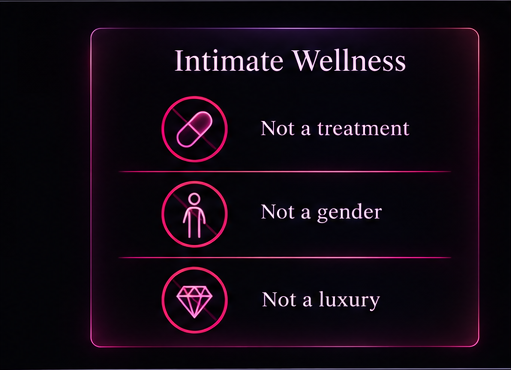
Three things the definition rules out. It is not a medical treatment — wellness products support experience and comfort; they do not diagnose, cure or treat anything, and any article claiming otherwise should be read with suspicion, including by us.
It is not a gender or a relationship status — it applies equally to singles, couples, and every body. And it is not a luxury: like sleep, it compounds quietly in both directions.
The word "wellness" is doing real work in that sentence, and it is why the framing matters in a market like the UAE. Approaching intimate life as health rather than indulgence changes the questions you ask — from "is this allowed?" to "is this body-safe, is this information accurate, does this fit my life?" Those are exactly the questions the rest of this guide answers.
Why Intimate Wellness Matters
The case is practical, not philosophical. Consider what the absence looks like: stress with no release valve, disconnection in long-term relationships that neither partner knows how to name, bodies changing with age or circumstance with no information about what to do about it, and misinformation filling every gap — which, in a region where adult topics are rarely discussed openly, is the default state.
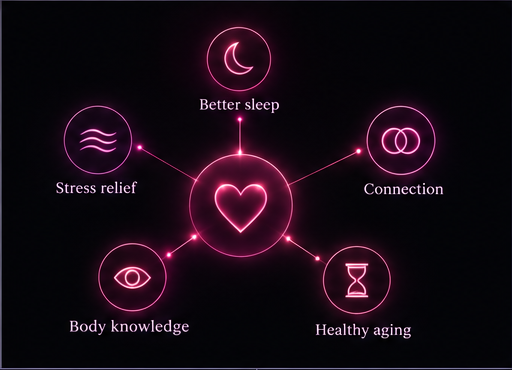
Now the presence: better sleep and stress relief (orgasm releases oxytocin and prolactin, both associated with relaxation and drowsiness), maintained pelvic and genital blood flow as the body ages, and — most underrated — a communication channel. Couples who can talk about what feels good can usually talk about anything: money, in-laws, resentment. Intimacy experts consistently observe that the bedroom conversation is a proxy for the whole relationship's honesty.
An honest caveat, in the same spirit as our other guides: we are a retailer, not clinicians, and this article is practical guidance rather than medical advice. If something hurts, has always hurt, or is causing distress, that is a conversation for a doctor — and the UAE's healthcare system is well used to these questions being asked.
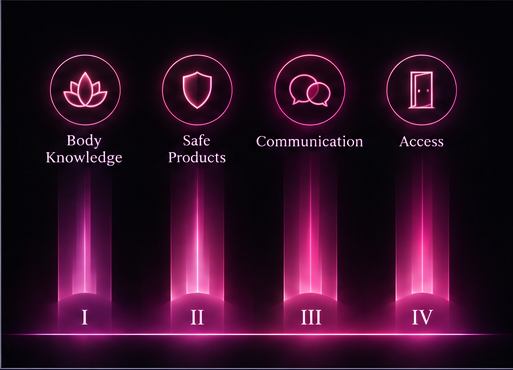
The Four Pillars, One by One
Pillar 1: Body Knowledge
Knowing your own anatomy and responses — what feels good, what does nothing, what changes across your cycle or over the years. It is the foundation because everything else is guesswork without it. Toys belong to this pillar more than most people realize: a first vibrator is less about the device than about what it teaches you, which our beginner's guide to choosing one treats as the entire point.
Pillar 2: Safe Products and Practices
Body-safe materials, honest labeling, correct cleaning, water-based lubricants where silicone demands them. This is the pillar where quality genuinely differs — medical-grade silicone and TPE have different care lifespans and different price floors, and the difference is worth understanding before your first purchase rather than after. Our silicone vs TPE materials guide covers what actually matters.
Pillar 3: Relational Communication
The skills side: naming desires without shame, hearing a partner's without defensiveness, negotiating mismatched preferences. No product fixes this pillar, but products often start the conversation — a shared toy is a concrete thing to discuss, which is easier than an abstract feeling. Comparing options together (our air-pulse vs traditional comparison exists for exactly this) is a low-stakes rehearsal for harder conversations.
Pillar 4: Access and Environment
The logistics pillar — private, reliable, judgment-free access to the above. In the UAE this is its own topic: what's legal, how discreet delivery works, how to pay without a trail. It is the pillar this site spends the most words on, and the next section summarizes it.
Is Using Toys Normal? (The Question Behind the Question)
Yes — and the data is unambiguous. Majority use in most surveyed populations, mainstream retail availability, and design convergence toward what looks like ordinary personal care. More useful than "normal" is the framing shift: a toy is to intimate wellness what a foam roller is to fitness — a tool that makes a natural practice more reliable. It does not replace a partner, create a dependency, or signal that anything is missing. The dependency question deserves its own honest answer in the FAQ below, because "does it desensitize?" is the single most-asked question in this category.

What is not normal: pain, numbness lasting beyond hours, or needing escalating intensity over time. Those are signals to pause and consult a clinician — a body responding normally to a well-made product does none of those things.
For the UAE specifically: no law criminalizes an adult for privately owning or using intimate products at home. The restrictions target commercial import — the reason buying from a UAE-stocked store matters — and our legal guide covers this properly.
Where to Start: A Simple Progression
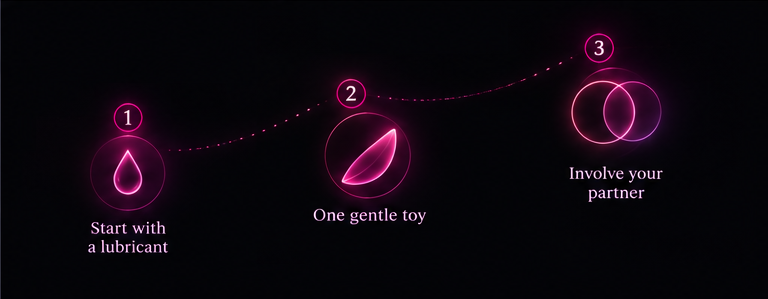
Beginners overthink this. The progression is:
- Start with knowledge and a lubricant. A good water-based lubricant (AED 29) is the least intimidating product in the category and improves nearly everything else. It is the honest first purchase.
- Add one gentle toy, not a themed arsenal. A feather-light starter like the Air Pulse Suction Vibrator (AED 270) begins its lowest mode genuinely gentle, or a classic slim vibrator teaches preferences the same way. One product, a few weeks of unhurried use, then reassess.
- Involve your partner at the pace of your conversation. Comparing product pages together is the on-ramp most couples actually use. Shared options range from a rose-shaped suction toy to dual-motor designs — browse the collections together and let the discussion be the point.
The UAE Picture: Access, Legality, Privacy
Pillar 4 in practice. The legal baseline: private ownership and use by adults at home is not criminalized; commercial import of items classed as obscene is restricted, which is why the UAE's official customs guidance matters — an international order passes a checkpoint a domestic one never sees. Buy from stores holding stock inside the country.
Privacy is the second half of access: plain packaging, a neutral billing descriptor, and payment options that fit your comfort — cash on delivery remains the regional privacy favorite even as digital payments spread, and our COD vs card comparison weighs both. After checkout, the UAE's data protection law (PDPL) sets the legal floor for what a store may do with your order history.
The full local playbook is spread across our guides, each one deeper than this summary: the discreet shopper's guide, how discreet delivery works, the first-time buyer checklist, same-day delivery in Dubai, and the Abu Dhabi shopping guide. Read this page once; bookmark those as needed.
Frequently Asked Questions
What is intimate wellness?
Intimate wellness is the practice of caring for your sexual and relational wellbeing through body knowledge, safe products, communication and reliable access. It treats intimate health as a normal dimension of self-care — like sleep or nutrition — rather than a taboo or a luxury.
Is using intimate toys normal?
Yes. Surveys across multiple countries show majority use among adults, and mainstream retailers now stock the category openly. A toy is a wellness tool — comparable to a foam roller in fitness — not a sign that anything is missing from a person or a relationship.
Do vibrators cause permanent desensitization?
No. Strong, prolonged use can cause temporary numbness that fades within minutes to hours; it is not nerve damage. Contact-light options like air-pulse toys largely avoid even the temporary effect. Escalating intensity needs over time warrant a pause and a clinician's opinion.
Is intimate wellness only about sex?
No. It covers four pillars: body knowledge, safe products, communication and access. Stress relief, sleep quality, healthy aging and relationship honesty all sit inside it — the physical act is only one component of the wellbeing it describes.
Is buying intimate wellness products legal in the UAE?
Private ownership and use by adults at home is not criminalized. The restrictions target commercial import, which is why international orders can face customs seizure. Buying from a UAE-stocked store avoids that risk entirely.
Where should a complete beginner start?
Start with a water-based lubricant — the least intimidating and most universally useful product in the category. Then add one gentle toy, such as a slim vibrator or a feather-light air-pulse model, and give it a few unhurried weeks before deciding anything further.
Are intimate wellness products actually safe?
Body-safe ones are, and material is the deciding factor: medical-grade silicone is non-porous and durable, while lower-grade blends degrade faster and are harder to clean fully. Buy from stores that specify materials, and pair any product with water-based lubricant.
Does intimate wellness include lubricants and condoms?
Yes. Lubricants, condoms, delay products and personal care items are core intimate wellness products — often the first and most practical purchases in the category. They support comfort, safety and experience without involving anything battery-powered.
The Bottom Line
Intimate wellness is self-care applied to the part of life most people leave on autopilot. The four pillars — knowing your body, choosing safe products, communicating honestly and buying privately — are all learnable, and none of them require urgency. Start where the list starts: one honest product, one unhurried month, and a conversation you have been postponing. The rest of this journal exists for whichever pillar you want to go deeper on.